
Slavery and the
U.S. Presidents
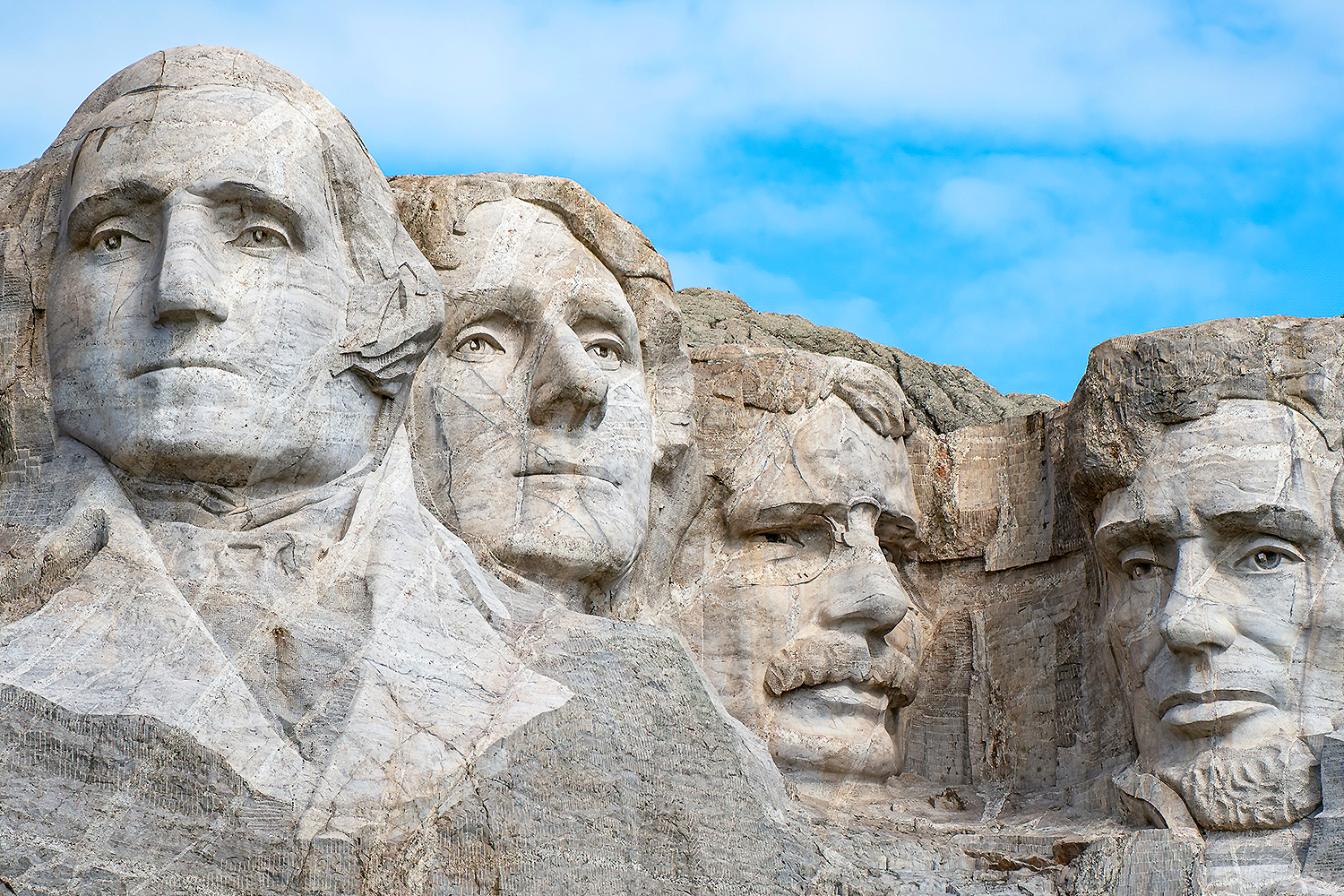
Presidents With No Slaves
The presidents on this page did not own enslaved people. However, several of these presidents still supported policies, systems, and ideologies that sustained the institution of slavery.
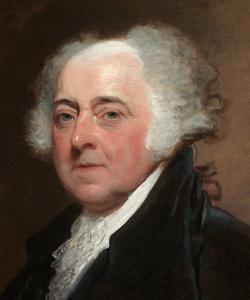
John Adams
To his everlasting credit, John Adams abhorred the practice of slavery and never owned a slave. At the same time, he defended the right of Southerners to preserve the institution of slavery until they themselves chose to abolish it.
In a February 3, 1821, letter to Thomas Jefferson, Adams wrote: “Slavery in this Country I have seen hanging over it like a black cloud for half a Century … I have been so terrified with this Phenomenon that I constantly said in former times to the Southern Gentlemen, I cannot comprehend this object; I must leave it to you. I will vote for forceing no measure against your judgements.” (misspellings in original)
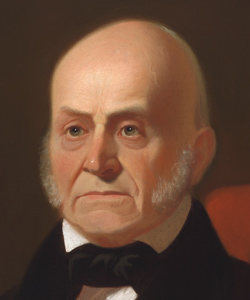
John Quincy Adams
John Quincy Adams denounced slavery more strongly than did any other early American president, calling slavery “a sin before the sight of God,” an “outrage upon the goodness of God,” and “the great and foul stain upon the North American Union.”
Unfortunately, most of these statements were confined to Adams’ personal diary. Adams never publicly condemned slavery while serving as Secretary of State, candidate for President, or President. Indeed, as a U.S. Senator, Adams opposed efforts to bar slavery and the importation of slaves in the Louisiana Territory, arguing that “Slavery in a moral sense is an evil; but as connected with commerce it has important uses.”
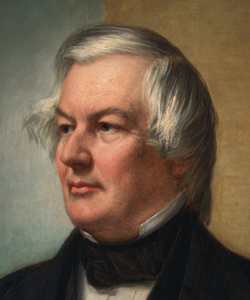
Millard Fillmore
The slaves themselves do not regard their condition as so bad that they have any strong desire to change it … [Northern] demagogues … have raised up a party, fired with a fanatical zeal against the imaginary wrongs of slavery.
— Letter to Dorothy Dix, March 5, 1860
When Millard Fillmore took office in 1850, he was the first non-slaveholding president aside from John Adams and his son. In a speech on March 15, 1854, Fillmore said that he “had cherished from his youth up a feeling, even a prejudice, against slavery.”
Yet this antislavery feeling was not apparent in his political record. Fillmore referred to the antislavery movement as a “trivial” cause, and during his first year as president, he signed the Fugitive Slave Act, calling for the return of escaped slaves without permitting a jury trial for fugitives. In a suppressed portion of his 1852 Annual Message to Congress (later published in a pamphlet), Fillmore went even further: “I see no remedy but by colonizing the free blacks, either in Africa or the West Indies … There can be no well-grounded hope for the improvement of either their moral or social condition, until they are removed from a humiliating sense of inferiority in the presence of a superior race.”
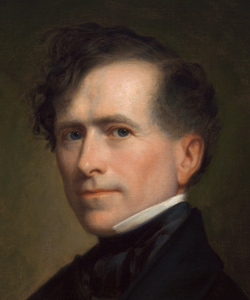
Franklin Pierce
In a speech on June 5, 1845, Franklin Pierce referred to slavery as “one of the greatest moral and social evils, a curse upon the whole country.”
Nonetheless, he also viewed slavery as a right “secured by the constitution, which binds together and which I humbly hope ever will bind together this great and glorious confederacy as one family.” To Pierce, abolitionists were “reckless fanatics” who threatened the union. During U.S. Senate deliberations on slavery in the District of Columbia, Pierce said: “I oppose the Abolitionists … domestic slavery exists here in its mildest form … [Slaves] are attached to the families in which they have lived from childhood. They are comfortably provided for, and apparently contented.”
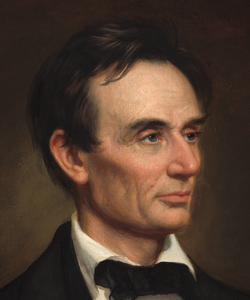
Abraham Lincoln
Abraham Lincoln opposed slavery throughout his life, and by freeing slaves during the American Civil War, he did more to improve the lives of Black Americans than any other president.
Lincoln referred to slavery as a “monstrous injustice” and “a moral, social and political evil.” With characteristic eloquence, he wrote in 1864: “I am naturally anti-slavery. If slavery is not wrong, nothing is wrong.”
Yet Lincoln did not originally intend to abolish slavery. On August 21, 1858, in his famous debate with Stephen Douglas, Lincoln said: “I have no purpose directly or indirectly to interfere with the institution of slavery.” It was only when Lincoln feared losing the Civil War that he freed slaves in the South. “If I could save the Union without freeing any slave I would do it,” wrote Lincoln in 1862. “What I do about slavery, and the colored race, I do because I believe it helps to save the Union.”
Nor did Lincoln support equal rights, as he made clear in a speech on September 18, 1858: “I am not, nor ever have been in favor of bringing about in any way the social and political equality of the white and black races … I am not nor ever have been in favor of making voters or jurors of negroes, nor of qualifying them to hold office, nor to intermarry with white people; and I will say in addition to this that there is a physical difference between the white and black races which I believe will for ever forbid the two races living together on terms of social and political equality. And inasmuch as they cannot so live, while they do remain together there must be the position of superior and inferior, and I as much as any other man am in favor of having the superior position assigned to the white race.”