

Racism Then
Booklist by Topic
The following materials relate to historic forms of racial prejudice, stereotyping, and discrimination. To learn more about an item or to purchase a book, please click on its title. As an Amazon Associate, up to 15% of all book purchases made through Amazon.com (by clicking a link below and ordering the book online) will go toward supporting this web site.
The Origins of Race and Racism


- Allen, T. W. (2022). The Invention of the White Race: The Origin of Racial Oppression. Verso.
- Back, L., & Solomos, J. (Eds.). (2022). Theories of Race and Racism: A Reader (3rd ed.). Routledge.
- Eliav-Feldon, M., Isaac, B., & Ziegler, J. (Eds.). (2013). The Origins of Racism in the West (Paperback ed.). Cambridge University Press.
- Fredrickson, G. (2015). Racism: A Short History (Princeton Classics ed.). Princeton University Press.
- Isaac, B. (2006). The Invention of Racism in Classical Antiquity. Princeton University Press.
- Jordan, W. D. (2012). White Over Black: American Attitudes Toward the Negro, 1550-1812 (2nd ed.). University of North Carolina Press.
- Kendi, I. X. (2023). Stamped From the Beginning: The Definitive History of Racist Ideas in America (Rev. ed.). Bold Type Books.
- Kendi, I. X., & Blain, K. N. (Eds.). (2022). Four Hundred Souls: A Community History of African America, 1619-2019. One World.
- Roediger, D. R. (2010). How Race Survived U.S. History: From Settlement and Slavery to the Obama Phenomenon. Verso.
- Sjursen, D. (2021). A True History of the United States: Indigenous Genocide, Racialized Slavery, Hyper-Capitalism, Militarist Imperialism and Other Overlooked Aspects of American Exceptionalism. Steerforth Press.
- Smedley, A., & Smedley, B. D. (2018). Race in North America: Origin and Evolution of a Worldview (4th ed.). Routledge.
- Sussman, R. W. (2016). The Myth of Race: The Troubling Persistence of an Unscientific Idea. Harvard University Press.
Classics on Racism and Slavery



- Douglass, F. (2021). Narrative of the Life of Frederick Douglass: An American Slave. Mercer University Press. (Original work published 1845) [Free e-book version]
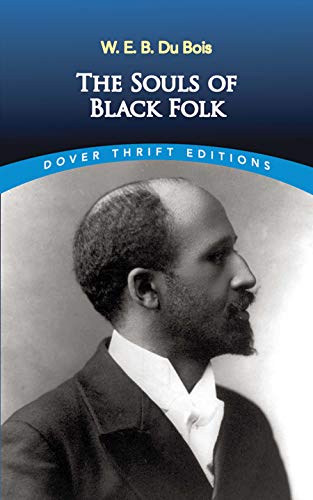
- Dubois, W. E. B. (2016). The Souls of Black Folk (Dover Thrift ed.). Dover Publications. (Original work published 1903)
- Griffin, J. H. (2023). Black Like Me. Berkley. (Original work published 1962)
- Jacobs, H. (2001). Incidents in the Life of a Slave Girl. Dover Publications. (Original work published 1861)
- Northup, S. (2012). Twelve Years a Slave. Penguin Classics. (Original work published 1853)
- Still, W. (2019). The Underground Railroad Records: Narrating the Hardships, Hairbreadth Escapes, and Death Struggles of Slaves in Their Efforts for Freedom (Q. T. Mills, Ed.). Modern Library. (Original work published 1872)
- Stowe, H. B. (1983). Uncle Tom’s Cabin. Bantam Classics. (Original work published 1851–1852)
- Truth, S. (2023). Narrative of Sojourner Truth. SeaWolf Press. (Original work published 1850)
- Washington, B. T. (1995). Up From Slavery (Dover Thrift ed.). Dover Publications. (Original work published 1901)
History of U.S. Slavery




- Baumgartner, A. L. (2022). South to Freedom: Runaway Slaves to Mexico and the Road to the Civil War (Trade paperback ed.). Basic Books.
- Blackmon, D. A. (2009). Slavery by Another Name: The Re-Enslavement of Black Americans From the Civil War to World War II. Vintage.
- Commander, M. D. (Ed.). (2021). Unsung: Unheralded Narratives of American Slavery & Abolition. Penguin Books.
- Finkelman, P. (2020). Defending Slavery: Proslavery Thought in the Old South: A Brief History With Documents (2nd ed.). Bedford/St. Martin’s.
- Franklin, J. H. (2000). From Slavery to Freedom: A History of African Americans. Knopf.
- Genovese, E. D. (1976). Roll, Jordan, Roll: The World the Slaves Made. Vintage Books.
- Haley, A. (2014). Roots: The Saga of an American Family. Da Capo Press.
- Hannah-Jones, N., Roper, C., & Silverstein, J. (Eds.). (2021). The 1619 Project: A New Origin Story. One World.
- Harpham, J. S. (2025). The Intellectual Origins of American Slavery: English Ideas in the Early Modern Atlantic World. Harvard University Press.
- Kashatus, W. C. (2021). William Still: The Underground Railroad and the Angel at Philadelphia. University of Notre Dame Press.
- Kolchin, P. (2003). American Slavery: 1619-1877 (Rev. ed.). Hill and Wang.
- Manegold, C. S. (2010). Ten Hills Farm: The Forgotten History of Slavery in the North. Princeton University Press.
- Morrison, T. (2004). Beloved (Vintage international ed.). Vintage Books.
- Rasmussen, D. (2011). American Uprising: The Untold Story of America’s Largest Slave Revolt. Harper Perennial.
- Reséndez, A. (2016). The Other Slavery: The Uncovered Story of Indian Enslavement in America (2nd ed.). Mariner Books.
- Smith, C. (2022). How the Word Is Passed: A Reckoning with the History of Slavery Across America (Paperback ed.). Back Bay Books.
- Smithers, G. D. (2012). Slave Breeding: Sex, Violence, and Memory in African American History. University Press of Florida.
- Spillman, S. (2025). Making Sense of Slavery: America’s Long Reckoning, From the Founding Era to Today. Basic Books.
- Tise, L. E. (1987). Proslavery: A History of the Defense of Slavery in America, 1701-1840. University of Georgia Press.
- Whitehead, C. (2018). The Underground Railroad: A Novel. Vintage Books.
- Wills, S. (2019). Black Fortunes: The Story of the First Six African Americans Who Survived Slavery and Became Millionaires (Paperback ed.). Amistad.
U.S. Presidents, Slavery, and Race


- Austin, A. (2015). America Is Not Post-Racial: Xenophobia, Islamophobia, Racism, and the 44th President. Praeger.
- Azari, J. R. (2025). Backlash Presidents: From Transformative to Reactionary Leaders in American History. Princeton University Press.
- Bicknell, C. B. (2025). The Pathfinder and the President: John C. Frémont, Abraham Lincoln, and the Battle for Emancipation. Stackpole Books.
- Davis, K. C. (2016). In the Shadow of Liberty: The Hidden History of Slavery, Four Presidents, and Five Black Lives. Henry Holt and Company.
- Dunbar, E. A. (2017). Never Caught: The Washingtons’ Relentless Pursuit of Their Runaway Slave. Simon & Schuster.
- Foner, E. (2011). The Fiery Trial: Abraham Lincoln and American Slavery (Norton paperback ed.). W. W. Norton & Company.
- Gordon-Reed, A. (2009). The Hemingses of Monticello: An American Family. W. W. Norton & Company.
- Hirschfeld, F. (1997). George Washington and Slavery: A Documentary Portrayal. University of Missouri Press.
- Kimberley, M. (2020). Prejudential: Black America and the Presidents. Steerforth Press.
- Lusane, C. (2011). The Black History of the White House. City Lights Bookstore.
- O’Reilly, K. (1995). Nixon’s Piano: Presidents and Racial Politics From Washington to Clinton. Free Press.
- Sinkler, G. (1971). The Racial Attitudes of American Presidents: From Abraham Lincoln to Theodore Roosevelt. Doubleday.
- Tesler, M. (2016). Post-Racial or Most-Racial?: Race and Politics in the Obama Era. University of Chicago Press.
- Waldstreicher, D. (2004). Runaway America: Benjamin Franklin, Slavery, and the American Revolution. Hill and Wang.
- Wiencek, H. (2003). An Imperfect God: George Washington, His Slaves, and the Creation of America. Farrar, Straus and Giroux.
- Wiencek, H. (2012). Master of the Mountain: Thomas Jefferson and His Slaves. Farrar, Straus and Giroux.
Internment of Japanese Americans


- Abe, F., & Cheung, F. (Eds.). (2024). The Literature of Japanese American Incarceration. Penguin Books.
- Briones, M. M. (2012). Jim and Jap Crow: A Cultural History of 1940s Interracial America. Princeton University Press.
- Dower, J. W. (1986). War Without Mercy: Race and Power in the Pacific War. Pantheon Books.
- Grant, K. C. (2012). Silver Like Dust: One Family’s Story of America’s Japanese Internment. Pegasus Books.
- Gordon, L., & Okihiro, G. Y. (Eds.). (2006). Impounded: Dorothea Lange and the Censored Images of Japanese American Internment. W. W. Norton & Company.
- Gruenewald, M. M. (2005). Looking Like the Enemy: My Story of Imprisonment in Japanese American Internment Camps. NewSage Press.
- Harvey, R. (2024). Amache: The Story of Japanese Internment in Colorado During World War II. Filter Press.
- Houston, J. W., & Houston, J. D. (2023). Farewell to Manzanar: A True Story of Japanese American Experience During and After the World War II Internment. Clarion Books. (Original work published 1973)
- Kamei, S. H. (2021). When Can We Go Back to America? Voices of Japanese American Incarceration During WWII. Simon & Schuster.
- Ng, W. (2002). Japanese American Internment During World War II: A History and Reference Guide. Greenwood Press.
- Robinson, G. (2001). By Order of the President: FDR and the Internment of Japanese Americans. Harvard University Press.
- Robinson, G. (2009). A Tragedy of Democracy: Japanese Confinement in North America. Columbia University Press.
- United States Commission on Wartime Relocation and Internment of Civilians. (1997). Personal Justice Denied: Report of the Commission on Wartime Relocation and Internment of Civilians. U.S. Government Printing Office.
- Weglyn, M. N. (1996). Years of Infamy: The Untold Story of America’s Concentration Camps (Updated ed.). University of Washington Press.
Civil Rights Movement




- Brinkley, D. (2005). Rosa Parks: A Life. Penguin Books.
- Brown-Nagin, T. (2011). Courage to Dissent: Atlanta and the Long History of the Civil Rights Movement. Oxford University Press.
- Carson, C. (Ed.). (1991). The Eyes on the Prize: Civil Rights Reader: Documents, Speeches, and Firsthand Accounts from the Black Freedom Struggle, 1954-1990. Penguin Books.
- Greenberg, D. (2024). John Lewis: A Life. Simon & Schuster.
- Hampton, H. (1991). Voices of Freedom: An Oral History of the Civil Rights Movement from the 1950s Through the 1980s (Bantam trade paperback ed.). Bantam Books.
- Joseph, P. E. (2025). Freedom Season: How 1963 Transformed America’s Civil Rights Revolution. Basic Books.
- Kluger, R. (2004). Simple Justice: The History of Brown V. Board of Education and Black America’s Struggle for Equality. Vintage Books.
- Long, M. G. (Ed.). (2012). I Must Resist: Bayard Rustin’s Life in Letters. City Lights Publishers.
- Luxenberg, S. (2019). Separate: The Story of Plessy v. Ferguson, and America’s Journey From Slavery to Segregation. W. W. Norton & Company.
- Malcolm X. (2015). The Autobiography of Malcolm X (Mass market ed.). Ballantine Books. (Original work published 1964)
- McGuire, D. L. (2010). At the Dark End of the Street: Black Women, Rape, and Resistance—A New History of the Civil Rights Movement From Rosa Parks to the Rise of Black Power. Vintage Books.
- McKinstry, C. M. (2011). While the World Watched: A Birmingham Bombing Survivor Comes of Age During the Civil Rights Movement. Tyndale House Publishers.
- Moody, A. (1968). Coming of Age in Mississippi. Dial Press.
- Parks, R. (1992). Rosa Parks: My Story. Dial Books.
- Payne, L. & Payne, T. (2020). The Dead Are Arising: The Life of Malcolm X. Liveright Publishing Corporation.
- Penningroth, D. C. (2023). Before the Movement: The Hidden History of Black Civil Rights. Liveright Publishing Corporation.
- Theoharis, J. (2025). King of the North: Martin Luther King Jr.’s Life of Struggle Outside the South. The New Press.
- Tubbs, A. M. (2021). The Three Mothers: How the Mothers of Martin Luther King, Jr., Malcom X, and James Baldwin Shaped a Nation. Flatiron Books.
- Walker, V. S. (2018). The Lost Education of Horace Tate: Uncovering the Hidden Heroes Who Fought for Justice in Schools. The New Press.
- Weiss, E. (2025). Spell Freedom: The Underground Schools That Built the Civil Rights Movement. Simon & Schuster.
- Williams, J. (2013). Eyes on the Prize: America’s Civil Rights Years, 1954-1965 (Reprint ed.). Penguin Books.
Martin Luther King, Jr.


- Bakaya, S. (2019). Only in Darkness Can You See the Stars: Martin Luther King Jr. Vitasta Publishing Pvt Ltd.
- Eig, J. (2025). King: A Life. Picador.
- Jones, C. B., & Connelly, S. (2011). Behind the Dream: The Making of the Speech That Transformed a Nation. Palgrave Macmillan.
- King, M. L., Jr. (1964). Why We Can’t Wait. Harper & Row.
- Carson, C. (Ed.). King, M. L., Jr. (1998). The Autobiography of Martin Luther King, Jr. Warner Books.
- King, M. L., Jr. (2010). Where Do We Go From Here: Chaos or Community? Beacon Press.
- King, M. L., Jr. (2022). I Have a Dream. HarperOne.
- Pepper, W. F. (2003). An Act of State: The Execution of Martin Luther King. Verso.
- Risen, C. (2009). A Nation on Fire: America in the Wake of the King Assassination. John Wiley & Sons, Inc.
- Sundquist, E. J. (2009). King’s Dream. Yale University Press.
- Washington, J. M. (Ed.). (1986). A Testament of Hope: The Essential Writings and Speeches of Martin Luther King, Jr. Harper & Row.
- Watkins, A. F. (2013). Martin Luther King Jr.: A King Family Tribute. Abrams.
Other Historical Topics on Race


- Acuña, R. (2011). Occupied America: A History of Chicanos (7th ed.). Longman.
- Berard, A. (2016). Water Tossing Boulders: How a Family of Chinese Immigrants Led the First Fight to Desegregate Schools in the Jim Crow South. Beacon Press.
- Burnham, M. A. (2022). By Hands Now Known: Jim Crow’s Legal Executioners. W. W. Norton & Company.
- Burkholder, Z. (2011). Color in the Classroom: How American Schools Taught Race, 1900-1954. Oxford University Press.
- Choy, C. C. (2022). Asian American Histories of the United States. Beacon Press.
- Ewing, E. L. (2025). Original Sins: The (Mis)education of Black and Native Children and the Construction of American Racism. One World.
- Gonzalez, J. (2022). Harvest of Empire: A History of Latinos in America (2nd rev. and updated ed.). Penguin Books.
- Gray, F. D. (1998). The Tuskegee Syphilis Study: The Real Story and Beyond. NewSouth Books.
- Jones, J. H. (1993). Bad Blood: The Tuskegee Syphilis Experiment (new and expanded). Free Press.
- Keevak, M. (2011). Becoming Yellow: A Short History of Racial Thinking. Princeton University Press.
- Lew-Williams, B. (2025). John Doe Chinaman: A Forgotten History of Chinese Life under American Racial Law. Belknap Press.
- Lukasik, G. (2017). White Like Her: My Family’s Story of Race and Racial Passing. Skyhorse Publishing.
- Luo, M. (2025). Strangers in the Land: Exclusion, Belonging, and the Epic Story of the Chinese in America. Doubleday.
- Richards, G. (2012). Race, Racism and Psychology: Towards a Reflexive History (2nd ed.). Psychology Press.
- Rooks, N. M. (2025). Integrated: How American Schools Failed Black Children. Pantheon Books.
- Rothstein, R. (2017). The Color of Law: A Forgotten History of How Our Government Segregated America. W. W. Norton & Company.
- Washington, H. A. (2006). Medical Apartheid: The Dark History of Medical Experimentation on Black Americans from Colonial Times to the Present. Harlem Moon.
- Wilkerson, I. (2011). The Warmth of Other Suns: The Epic Story of America’s Great Migration. Vintage Books.
- Williams, G. H. (1996). Life on the Color Line: The True Story of a White Boy who Discovered He Was Black. Plume.
- Yacovone, D. (2023). Teaching White Supremacy: America’s Democratic Ordeal and the Forging of Our National Identity (First Vintage Books ed.). Vintage.
Scholarly Journals
Journals Focused on Slavery
Journals on Race and History
Magazines and E-Zines
- American Heritage (includes African American history and the Civil War)
- America’s Civil War and Civil War Times (archives from Historynet.com)
- Civil War Monitor (military, political, social, and economic perspectives)
- Monticello Magazine (has occasional articles on slavery at Monticello)
- National Geographic History (U.S. and world history; also newsletter)
- North & South Magazine (official magazine of the Civil War Society)
- Smithsonian Magazine (often covers U.S. history)
- The Crisis (official publication of the NAACP)
- Transition: The Magazine of Africa and the Diaspora (Harvard University)
Videos
The following videos relate to historical forms of racial prejudice and discrimination.

What Is “Race,” and Where Did the Idea Come From?
Race wasn’t always considered a biological or genetic category, so how did we come to understand it that way today? This video discusses how definitions of race have changed significantly over time with the rise of capitalism, colonialism, slavery, science, and The Enlightenment (a European intellectual movement that emphasized reason, science, and individual liberty).
For more information on the concept of race, see:

Human Zoos: America’s Forgotten History of Scientific Racism
This award-winning documentary tells the shocking story of how thousands of Indigenous people of color were put on public display in America in the early decades of the twentieth century. In one well-known case, for example, a former African slave named Ota Benga was purchased by an American missionary for the equivalent of $5, exhibited at the 1904 St. Louis World’s Fair, and displayed in 1906 with a chimpanzee in the Bronx Zoo. Unable to return to his homeland, he later grew depressed and committed suicide. Public exhibits such as this one were grounded in pseudoscientific theories that regarded people of color as primitive and less evolved than White people, when in reality, it was the science that turned out to be primitive and undeveloped.

Facts About Slavery and the Transatlantic Slave Trade
From 1500 to 1880, approximately 10-12 million African people were forced into slavery in the Americas, and 15-25% of those people died during the journey from Africa to the Western hemisphere (they were not only chained together, but given an average space only 16″ wide). Most of the survivors were then sold like livestock, often being branded to show who their new owner was. All told, by 1825 the U.S population included about one quarter of the people of African descent in the Western Hemisphere.
For more information on the history of slavery, see:
- What Too Few Textbooks Say About the Slave Trade
- U.S. Medical System Is Still Haunted by Slavery
- A Former Slave’s Incredible Letter to His Old Master
- Jefferson’s Descendants Wrestle With His Legacy
- Crash Course on the Underground Railroad
- The Breathtaking Courage of Harriet Tubman
- The Life and Activism of Frederick Douglass

The Origins of Policing in America
This video explains the connection between slavery and policing. When American colonies were first established in the 17th century, White people needed a way to protect their most economically valuable assets—enslaved Africans. To this end, in the 1700s Southern colonies established official, salaried slave patrols and militias whose task was to monitor, control, and punish enslaved people. In addition, all White people were expected to enforce so-called “slave codes” designed to prevent enslaved people from organizing or rebelling. After slavery was abolished following the Civil War, the South then passed a series of crime bills known as “Black Codes,” which continued to limit Black freedom and ultimately laid the foundation for policing in the U.S.
For more information on this topic, see:

Lynching and Other Forms of Racial Violence in the U.S.
How did the practice of lynching begin and evolve in American history? How did Ida B. Wells, a black female investigative journalist, successfully challenge racial violence in the South? This video explores one of the darkest chapters in U.S. history: the rise of lynching after the Civil War through the mid-1900s.
For more information on lynching, the Ku Klux Klan, race riots, and racial violence, see:

A Brief History of the Chinese Exclusion Act
In 1882, the U.S. Congress passed the Chinese Exclusion Act—the first federal law that restricted immigration explicitly based on nationality. In practice, this Act banned the entry of all ethnically Chinese immigrants except diplomats, and it prohibited existing immigrants from obtaining citizenship. It also helped open the door to additional laws restricting immigration from other Asian countries, Eastern Europe, and southern Europe. The Chinese Exclusion Act was eventually repealed in 1943, but as this video points out, the U.S. government continues to use this precedent to deploy sudden and sweeping immigration policies in the name of national security.

Why the U.S. Photographed Its Own WWII Concentration Camps
Two months after Japan bombed Pearl Harbor, President Franklin D. Roosevelt issued Executive Order 9066 calling for the internment of Japanese Americans, including U.S. citizens of all ages. To control the narrative around this unprecedented act of mass incarceration, the government created a new department, called the “War Relocation Authority,” and it hired photographers to document what took place. One such photographer was Dorothea Lange, famous for her photos of the Great Depression. Most of the candid photos she took were impounded by the government, but they eventually came to light and helped bring about the Civil Liberties Act of 1988—a law that issued a formal apology and provided $20,000 in reparations to survivors of the camps.
For more information on the internment of Japanese Americans, see:
- Remembering Manzanar
- Why I Love a Country That Once Betrayed Me
- Japanese Internment Camp Survivors Speak Out
- I Was Sent to a U.S. Concentration Camp
- Japanese Relocation (U.S. government wartime film)
- My Japan (U.S. government wartime film)

A Time for Justice: America’s Civil Rights Movement
This video is a beautifully produced Academy Award winning history of the U.S. civil rights movement from 1954 (when the Supreme Court reached its Brown v. Board of Education decision, outlawing racial segregation in schools) through 1965 (the year of the Voting Rights Act). The film is narrated by Julian Bond and produced by the Southern Poverty Law Center.

Rosa Parks and Racial Segregation
This clip commemorates Rosa Parks, who refused to give up her bus seat to a White passenger in Montgomery, Alabama, on December 1, 1955. The segment, excerpted from the award-winning Eyes on the Prize documentary, tells the story of Ms. Parks’ arrest and how it ignited the Montgomery Bus Boycott.
For more information on Rosa Parks and segregation, see:

Martin Luther King: “I Have a Dream”
This video shows Martin Luther King, Jr.’s historic “I Have a Dream” speech in its entirety. Speaking at the “March on Washington for Jobs and Freedom” on August 28, 1963, from the steps of the Lincoln Memorial in Washington, DC, Dr. King describes his dream of a society in which people are judged by the content of their character rather than the color of their skin.
For information on Bayard Rustin, the civil rights activist who organized the March on Washington and was a close associate of Martin Luther King, see:

Crash Course on the Tuskegee Syphilis Experiment
From 1932 to 1972, the U.S. Public Health Service and the Centers for Disease Control and Prevention conducted an unethical medical experiment on what happens when syphilis goes untreated. Hundreds of poor Black men from Macon County, Alabama, were enrolled in the study, and treatment for syphilis was withheld from them. Even after it was learned that antibiotics could cure syphilis, the men were left to suffer from the disease and risk exposing their families to syphilis as well. This shameful example of medical racism continues to affect how Black Americans think about healthcare today.
For more information on the Tuskegee Experiment, see:
Additional Resources and Searchable Databases
Biography Channel videos:
- Harriet Tubman (7:27 minutes)
- Frederick Douglass (2:49 minutes)
- Nelson Mandela (6:50 minutes)
- Rosa Parks (4:41 minutes)
- Martin Luther King, Jr. (4:48 minutes)
- Walter Cronkite announcing the death of MLK (3:11 minutes)
- Robert Kennedy announcing the death of MLK (4:47 minutes)
For other films, clips, and reviews, please see:
Web Links
U.S. History and Prejudice
Slavery
- Anti-Slavery.org (world’s oldest international human rights group)
- Colonial Williamsburg Teacher Resources (also see Teaching Institute)
- Enslaved: Peoples of the Historic Slave Trade (centers enslaved people)
- Juneteenth (U.S. federal holiday celebrating the end of slavery)
- Slavery in America (overview from History.com)
- Slave Insurance (from Encyclopedia Virginia)
- Slave Narratives (from the U.S. Library of Congress)
- Slavery in New York (landmark interactive exhibit)
- Slavery in the North (a state-by-state historical overview)
- SlaveVoyages.org (database of voyages)
- The 1619 Project (New York Times Magazine)
- Timeline of Slavery in America (from 1619 to 1865)
Jim Crow
- African American Life During Jim Crow (University of Virginia)
- Behind the Veil (interviews, photographs, and oral histories)
- Freedom Riders (PBS documentary on how Jim Crow was challenged)
- Jim Crow Laws (sampler from the MLK National Historical Park)
- Jim Crow Museum of Racist Memorabilia (at Ferris State University)
- Remembering Jim Crow (from American RadioWorks)
Lynching in America
- An Outrage (documentary about lynching, along with teaching guide)
- History of Lynching in America (from the NAACP)
- Lynching in the United States (Wikipedia page; warning: graphic)
- Maryland Lynching Memorial Project (all-volunteer nonprofit)
- The NAACP’s Anti-Lynching Campaign (3-minute PBS documentary)
Internment of Japanese Americans
- Densho (preserving Japanese American stories of the past)
- Heart Mountain (WWII Japanese American confinement site)
- Japanese American Confinement (U.S. National Park Service)
- Japanese-American Incarceration During World War II (National Archives)
- Japanese American National Museum (archive of history and culture)
- Japanese Internment (San Francisco Digital History Archive)
- Manzanar National Historic Site (U.S. National Park Service)
- National Japanese American Historical Society (nonprofit)
- Star Trek’s George Takei on Growing Up in an Internment Camp (BBC)
- Trump Holding Immigrants in Former Japanese Camp (USA Today)
Operation Wetback
- Etymology and Meaning of the Term “Wetback” (Wikipedia page)
- Operation Wetback (from the Handbook of Texas Online)
- Operation Wetback: 1953-1954 (Immigration History)
- Operation Wetback: A Mass Deportation of Mexican Immigrants (Latinx History)
- Operation Wetback: The Blueprint of Trump’s Deportation Plan (60 Minutes)
- Operation Wetback: The Roots of Immigrant Deportations Today (video)
- The Largest Mass Deportation in American History (History.com)
- U.S. Government Stages Mass Deportations in the American Southwest (EJI)
The Struggle for Civil Rights
U.S. Civil Rights Movement
- Brown v. Board of Education National Historic Site (National Park Service)
- Birmingham Civil Rights Institute (physical and online exhibits)
- Civil Rights Digital Library (University of Georgia)
- Eyes on the Prize: America’s Civil Rights Movement (PBS series)
- Greensboro Sit-In Helps Launch a Civil Rights Movement (multimedia)
- Japanese American Citizens League (oldest Asian American civil rights group)
- National Civil Rights Museum (in Memphis, Tennessee)
- We Shall Overcome: Travel Places of the Civil Rights Movement (NPS)
Rosa Parks
- Rosa and Raymond Parks Institute for Self Development (nonprofit)
- Rosa Parks (biography on Wikipedia)
- Rosa Parks (overview of her activism from the NAACP)
- Rosa Parks Book List (U.S. Library of Congress)
- Rosa Parks Library and Museum (Troy University)
- Rosa Parks Scholarship Foundation (college scholarships)
- Teaching Activism: Beyond the Bus Boycott (lesson plan and links)
Martin Luther King, Jr.
- Martin Luther King, Jr. (Wikipedia biography)
- Martin Luther King, Jr. Center for Nonviolent Social Change (in Atlanta)
- Martin Luther King, Jr. Memorial (in Washington, D.C.)
- Martin Luther King, Jr. National Historic Park (U.S. National Park Service)
- Martin Luther King, Jr. Research and Education Institute (Stanford University)
- MLK Day (only U.S. federal holiday designated as a national day of service)
- The Nobel Peace Prize 1964 (awarded to Martin Luther King, Jr.)
Other Sites on Historic Racism
- BlackPast.org (more than 10,000 pages, including teaching resources)
- Frederick Douglass National Historic Site (U.S. National Park Service)
- History News Network (putting current events into historical perspective)
- National Museum of African American History (U.S. government museum)
- National Underground Railroad Freedom Center (located in Ohio)
- Teach Immigration History (from the University of Texas at Austin)
- The Chinese Exclusion Act (PBS documentary)
Other Publications
University Ties to Slavery
- Blight, D. W., with the Yale and Slavery Research Project. (2024). Yale and Slavery: A History. Yale University Press.
- Bogues, A., Cliatt, C., & Levy, A. (Eds.). (2021). Brown University’s Slavery and Justice Report With Commentary on Context and Impact (Report of the Brown University Steering Committee on Slavery and Justice, 2nd ed.). Brown University.
- George Mason University. (2017). Enslaved Children of George Mason.
- Presidential Committee on Harvard & the Legacy of Slavery. (2022). Harvard & the Legacy of Slavery. Harvard University.
- Princeton Theological Seminary. (2019, October). Princeton Seminary and Slavery: A Report of the Historical Audit Committee.
- Rice University. (2023, September). Final Report of the Task Force on Slavery, Segregation, and Racial Injustice.
- Sandweiss, M. A., & Hollander, C. (2024). Princeton and Slavery: Holding the Center. Princeton University.
- University of Virginia. (2018, July). President’s Commission on Slavery and the University (Report to President Teresa A. Sullivan).
- For additional reports, archives, and other initiatives, see Universities Studying Slavery (an international consortium)
Other Articles and Reports
- Benjamin, L. T., Jr., & Crouse, E. M. (2002). The American Psychological Association’s response to Brown v. Board of Education: The case of Kenneth B. Clark. American Psychologist, 57(1), 38-50.
- Equal Justice Initiative. (2017). Lynching in America: Confronting the Legacy of Racial Terror (3rd ed.).
- Herzig-Yoshinaga, A. (2009). Words Can Lie or Clarify: Terminology of the World War II Incarceration of Japanese Americans.
- Madara, J. L. (2021, February 17). Reckoning with medicine’s history of racism. American Medical Association.
- Ross, J. R. (2023, July 9). The History of Lynching in Texas: A Dark Chapter. Texas State Historical Association.
- Savitt, T. L. (1982). The use of blacks for medical experimentation and demonstration in the Old South. Journal of Southern History, 48(3), 331-348.
- Swarns, R. L. (2016, December 18). Insurance policies on slaves: New York Life’s complicated past. New York Times.