

The Roots of Prejudice
Booklist by Topic
At times, our stereotype-prone species can seem wired for trouble. The following materials relate to the psychological underpinnings of prejudice, stereotyping, and discrimination. To learn more about an item or to purchase a book, please click on its title. As an Amazon Associate, up to 15% of all book purchases made through Amazon.com (by clicking a link below and ordering the book online) will go toward supporting this website.
Textbooks on Prejudice


- Blaine, B. E. & Brenchley, K. J. M. (2020). Understanding the Psychology of Diversity (4th ed.). Sage Publications.
- DiAngelo, R., & Sensoy, Ö. (2025). Is Everyone Really Equal? An Introduction to Key Concepts in Social Justice Education (3rd ed.). Teachers College Press.
- Gross, R. (2021). The Psychology of Prejudice. Routledge.
- Healey, J. F., & Stepnick, A. (2022). Race, Ethnicity, Gender, and Class: The Sociology of Group Conflict and Change (9th ed.). Sage Publications.
- Hinton, P. R. (2020). Stereotypes and the Construction of the Social World. Routledge.
- Jackson, L. M. (2019). The Psychology of Prejudice: From Attitudes to Social Action (2nd ed.). American Psychological Association.
- Kite, M. E., Whitley, B. E., & Wagner L. S. (2022). Psychology of Prejudice and Discrimination (4th ed.). Routledge.
- Koppelman, J. K. (2019). Understanding Human Differences: Multicultural Education for a Diverse America (6th ed.). Pearson.
- Levin, J., & Nolan, J. (2017). The Violence of Hate: Understanding Harmful Forms of Bias and Bigotry (4th ed.). Rowman & Littlefield Publishers.
- Nelson, T. D., & Olson M. A. (2023). The Psychology of Prejudice (3rd ed.). Guilford Press.
- Pettigrew, T. F. (2021). Contextual Social Psychology: Reanalyzing Prejudice, Voting, and Intergroup Contact. American Psychological Association.
- Tan, A. (2023). Communication and Prejudice: Theories, Effects, and Interventions (4th ed.). Cognella Academic Publishing.
Anthologies on Prejudice






- Adams, M., Blumenfeld, W. J., Castañeda, R., DeJong, K. S., Hackman, H. W., Hopkins, L. E., Love, B. J., Peters, M. L., Shlasko, D., & Zúñiga, X. (Eds.). (2018). Readings for Diversity and Social Justice (4th ed.). Routledge.
- Anderson, M. L., & Collins, P. H. (2019). Race, Class, and Gender: Intersections and Inequalities (10th ed.). Cengage Learning.
- Barlow, K. F., & Sibley, C. G. (2018). The Cambridge Handbook of the Psychology of Prejudice. Cambridge University Press.
- Benuto, L. T., Duckworth, M. P., Masuda, A., & O’Donohue, W. (Eds.). (2020). Prejudice, Stigma, Privilege, and Oppression: A Behavioural Health Handbook. Springer.
- Dovidio, J. F., Glick, P., & Rudman, L. A. (Eds.). (2005). On the Nature of Prejudice: Fifty Years After Allport. Blackwell Publishers.
- Fiske-Rusciano, R. (Ed.). (2021). Experiencing Race, Class, and Gender in the United States (7th ed.). Rowman & Littlefield Publishers.
- Healey, J. F., & O’Brien, E. T. (Eds.). (2007). Race, Ethnicity, and Gender: Selected Readings (2nd ed.). Pine Forge Press.
- Joshi, S. T. (Ed.). (1999). Documents of American Prejudice: An Anthology of Writings on Race From Thomas Jefferson to David Duke. Basic Books.
- Molenberghs, P. (Ed.). (2022). The Neuroscience of Intergroup Relations: Global Perspectives on the Neural Underpinnings of Intergroup Behaviour, Ingroup Bias and Prejudice. Routledge.
- Nelson, T. D. (Ed.). (2024). Handbook of Prejudice, Stereotyping, and Discrimination (3rd ed.). Routledge.
- Plous, S. (Ed.). (2003). Understanding Prejudice and Discrimination. McGraw-Hill.
- Rosenblum, K. E., & Travis, T.-M. C. (Eds.). (2015). The Meaning of Difference: American Constructions of Race, Sex and Gender, Social Class, and Sexual Orientation: A Text/Reader (7th ed.). McGraw-Hill.
- Rothenberg, P. S. (Ed.). (2015). White Privilege: Essential Readings on the Other Side of Racism (5th ed.). Worth Publishers.
- Rothenberg, P. S., Accomando, C. H. (Eds.). (2019). Race, Class, and Gender in the United States: An Integrated Study (11th ed.). Worth Publishers.
- Tileagǎ, C., Augoustinos, M., & Durrheim, K. (Eds.). (2022). The Routledge International Handbook of Discrimination, Prejudice and Stereotyping. Routledge.
Authored Books







- Allport, G. W. (1979). The Nature of Prejudice (25th anniversary ed.). Basic Books.
- Anderson, E., Coures, K., Guerrón Montero, C., Schendel-Vyvoda, T. L., Schwörer, T., &Terrell, J. E. (2026). The Origins of Prejudice: Dangerous Opinions and Beliefs. Berghahn Books.
- Banaji, M. R., & Greenwald, A. G. (2016). Blindspot: Hidden Biases of Good People. Bantam Books.
- Brown, C. S. (2021). Unraveling Bias: How Prejudice Has Shaped Children for Generations and Why It’s Time to Break the Cycle. BenBella Books.
- Eberhardt, J. L. (2020). Biased: Uncovering the Hidden Prejudice That Shapes What We See, Think, and Do (Reprint ed.). Penguin Books.
- Gaertner, S. L., & Dovidio, J. F. (2014). Reducing Intergroup Bias: The Common Ingroup Identity Model. Routledge.
- Garcia, Y. E., & Blume, A. W., & Chin, J. L. (2026). The Psychology of Inequity: Social Actions and Movements. Bloomsbury Publishing.
- Gupta, A. (2026). Breaking Bias: Where Stereotypes and Prejudices Come From―And the Science-Backed Method to Unravel Them (Paperback ed.). Hay House.
- Mitchell, N. E. (2025). On Bigotry: Twenty Lessons on How Bigotry Works and What to Do About It. Bloomsbury Academic.
- Piketty, T., & Sandel, M. J. (2025). Equality: What It Means and Why It Matters. Polity.
- Ross, H. J. (2020). Everyday Bias: Identifying and Navigating Unconscious Judgments in Our Daily Lives (updated ed.). Rowman & Littlefield.
- Tajfel, H. (1981). Human Groups and Social Categories: Studies in Social Psychology. Cambridge University Press.
- Thrasher, S. W. (2024). The Viral Underclass: The Human Toll When Inequality and Disease Collide. Celadon Books.
- Tileagă, C., Augoustinos, M., & Durrheim, K. (Eds.). (2022). The Routledge International Handbook of Discrimination, Prejudice and Stereotyping. Routledge.
Scholarly Journals
Social Justice Journals
Journals That Cover Prejudice
Magazines and E-Zines
- Common Dreams (social justice e-zine for the common good)
- Human Rights Magazine (American Bar Association quarterly)
- In These Times (advancing democracy, justice, and a humane world)
- Lacuna Magazine: Exposing Injustice (human rights e-zine)
- Learning for Justice Magazine (Southern Poverty Law Center)
- Mother Jones (social justice through investigative reporting)
- OpenMind Magazine (combating bias and disinformation)
- The Progressive (magazine devoted to peace and social justice)
- The Continental Literacy Magazine (covers prejudice and more)
- The Forge (building progressive connections and community)
- The Sun (challenging the status quo and revealing injustice)
Videos
The following videos relate to the psychology of stereotyping, prejudice, discrimination, and implicit forms of bias.

How Prejudice, Stereotypes, and Discrimination Differ
People often use the words “prejudice,” “stereotype,” and “discrimination” interchangeably. But when psychologists study these things, they maintain a clear distinction between them. Although the three terms are related, it’s worth understanding how they differ.

A Powerful Lesson About Unearned Privilege
This 2-minute BuzzFeed video describes a powerful lesson about the way that unearned privilege often works. The lesson was developed by a high school teacher, but it’s simple enough to be used with younger students and profound enough to be used in higher education and workplace training.
Claude Steele Discusses Stereotype Threat
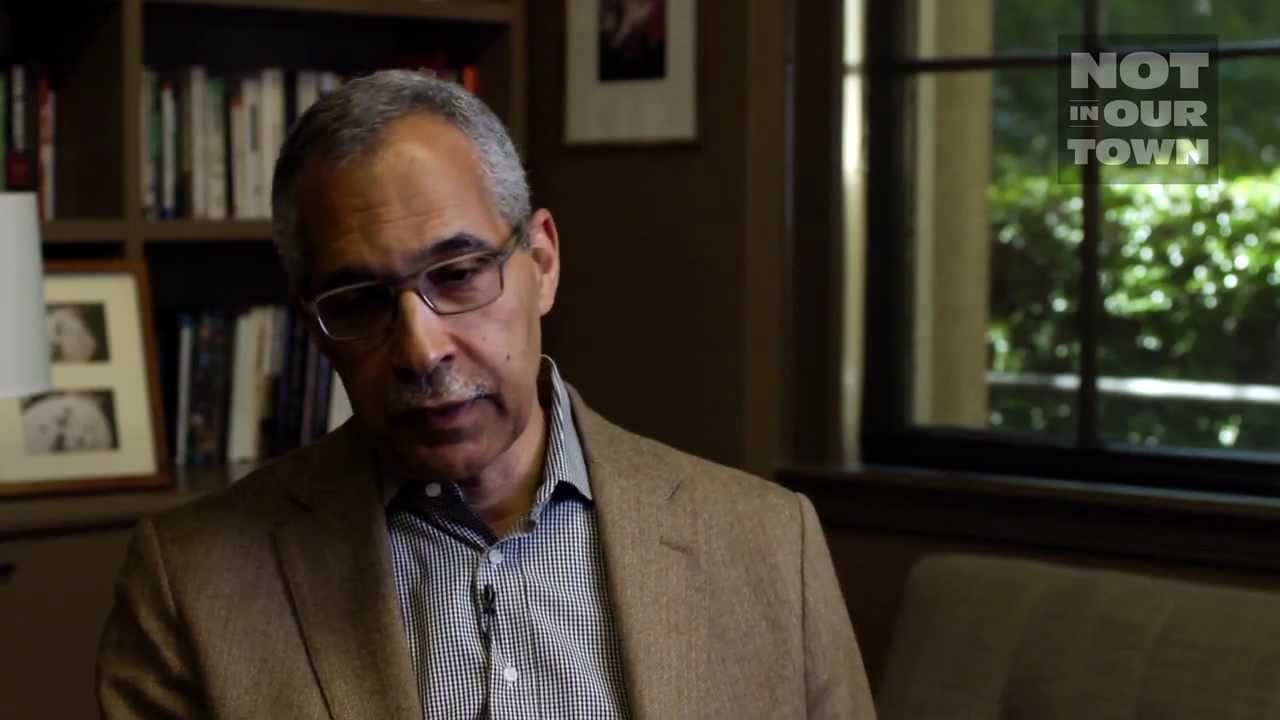
Claude Steele, former Stanford University Dean of Education, is the researcher who coined the term “stereotype threat” and co-conducted (with Josh Aronson) a series of pioneering experiments on its effects. Stereotype threat refers to the psychological pressure or fear of confirming a negative stereotype about one’s social group—a distraction that can disrupt performance by diverting attention, increasing anxiety, lowering confidence, and using up working memory, making it hard to focus on the task at hand. In this video, Professor Steele explains how this psychological dynamic works and what can be done to avoid it.
For more information on stereotype threat, see:

The Harm That Positive Stereotypes Can Do
Many years ago, a survey of 180 teachers in the U.S. found that many teachers stereotyped Asian students as being significantly more industrious, intelligent, and gentle than other students. These positive stereotype might seem like a good thing, but as this video explains, even positive stereotypes can do a significant amount of harm.

How the Outgroup Homogeneity Bias Fuels Stereotypes
Social psychology research has found that people tend to see members of their own group as more variable than members of other groups. For example, women sometimes complain that “men are all alike,” whereas men sometimes complain that “women are all alike.” In social psychology, this tendency is known as the “outgroup homogeneity bias”—a bias in which outgroups are seen as more homogeneous than ingroups. This video explains the bias as well as a related finding that people often see the faces of outgroup members as more similar to one another than the faces of ingroup members—a finding that can lead to biases in criminal justice.

How Implicit Biases Can Be Measured, and Why It Matters
Is it possible that most all of us have hidden racial biases—hidden even from ourselves? Harvard Professor of Psychology Mahzarin Banaji, who co-developed the Implicit Association Test, discusses how the IAT is able to measure biases outside of our awareness, and why the measurement of implicit bias is important. She also invites listeners to visit implicit.havard.edu and test their own biases.
For more information on implicit biases, see:

This classic film, which won an Academy Award in 1991 for Best Short Subject and a Palme d’Or at the Cannes Film Festival, shows how preconceptions can powerfully shape social interactions. The film tells the story of a White woman and Black man who share a meal in Grand Central Station, and it concludes with a thought-provoking surprise ending.

The Roots of Prejudice and Discrimination
Social psychology research shows that prejudice is much more than thinking negative thoughts about other people—it can also involve thoughts and feelings that are outside of awareness, resulting in unintended biases and discriminatory actions. In this videotaped lecture, psychology professor Stephen Wright explores the roots of prejudice and discrimination, and he offers research-based advice on how to reduce intergroup biases.
Additional Resources and Searchable Databases
YouTube channels:
For other films, clips, and reviews, please see:
Web Links
Introductions and Overviews
- What Is Prejudice? (a history, overview, and bibliography from The Decision Lab)
- Prejudice in Any Language (research review translated into multiple languages)
- What Is Social Justice? A Short Guide for Activists-in-the-Making (Global Citizen)
- World Day of Social Justice (United Nations annual event and extensive resources)
- Discrimination: What It Is and How to Cope (American Psychological Association)
- Implicit Bias (definition and resources from the American Psychological Association)
- Can We Unlearn Implicit Biases? (APA podcast featuring Mahzarin Banaji)
- Why Do We Hate? (from Common Sense Science, a Psychology Today blog)
- What Is Hate Speech? (overview and links from Rights for Peace)
Wikipedia Pages on Prejudice
Some Foundational Terms and Topics
- Dehumanization
- Discrimination
- Environmental Justice
- Equal Opportunity
- Ethnic Cleansing
- Ethnicity
- Eugenics
- Genocide
- Hate Crime
- Human Rights
- Human Trafficking
- Intersectionality
- Prejudice
- Segregation
- Slavery
- Social Justice
- Social Stigma
Common Types of Prejudice
- Ableism
- Ageism
- Antisemitism
- Classism
- Colorism
- Ethnocentrism
- Heterosexism
- Homophobia
- Islamophobia
- Racism
- Sexism
- Speciesism
- Transphobia
- Xenophobia
More on Race and Racism
- Aversive Racism
- Black Lives Matter
- Critical Race Theory
- Interracial Marriage
- Jim Crow
- One-Drop Rule
- Race
- Racial Discrimination
- Racial Profiling
- Racial Segregation
- White Supremacy
More on Sexism, Gender, and Sexuality
- Ambivalent Sexism
- Cisgender
- Feminism
- Gender
- Gender Binary
- Gender Identity
- Gender Inequality
- Gender Role
- Intersex
- LGBTQ+
- MeToo Movement
- Same-Sex Marriage
- Sex-Gender Distinction
- Sexual Orientation
- Transgender
The Psychology of Stereotyping
Other Psychology Dynamics and Theories
- Ambivalent Prejudice
- Authoritarian Personality
- Contact Hypothesis
- Ingroup and Outgroup
- Ingroup Favoritism
- Intergroup Relations
- Minimal Group Paradigm
- Outgroup Homogeneity
- Social Dominance Orientation
- Social Identity Theory
- System Justification Theory
- Ultimate Attribution Error
Prejudice-Related Online Courses
Racism and Anti-Racism
- Anti-Racism Specialization (University of Colorado Boulder)
- Asian American History and Identity: An Anti-Racism Toolkit (University of Colorado)
- Black Lives Matter (Johns Hopkins University)
- Causes of Racial Inequity in Healthcare (University of Michigan)
- Designing and Building Institutional Anti-Racist Spaces (Wesleyan University)
- Race and Cultural Diversity in American Life and History (University of Illinois)
Inequality, Poverty, and Classism
- America’s Poverty and Inequality Course (Stanford University)
- Human Rights, Human Wrongs: Challenging Social Exclusion (SDG Academy)
- Inequality and Democracy (Utrecht University)
- Justice Today: Money, Markets, and Morals (Harvard University)
- Making Universal Social Protection a Reality (SDG Academy)
- Understanding Poverty and Inequality (SDG Academy)
Sexism, Gender, and Feminism
- Doing Gender and Why It Matters (University of Hong Kong)
- Feminism and Social Justice (University of California, Santa Cruz)
- Gender Analytics: Gender Equity Through Inclusive Design (University of Toronto)
- Gender and Development (University of Iceland)
- Gender and Intersectionality (University of Iceland)
- Gender Equality (University of Western Australia)
- Gender, Violence and Post-Conflict States (University of Iceland)
- Gender-Based Violence: How to Become an Active Bystander (Politecnico di Milano)
- International Women’s Health and Human Rights (Stanford University)
- Seeking Women’s Rights: Colonial Period to the Civil War (Columbia University)
- Understanding Domestic Violence (Curtin University)
- Women in Leadership: Inspiring Positive Change (Case Western Reserve University)
- Women Making History: Ten Objects, Many Stories (Harvard University)
Sexual Orientation and Gender Identity
- Gender and Sexuality (American Psychological Association)
- Gender and Sexuality: Diversity and Inclusion in the Workplace (University of Pittsburgh)
- Health Across the Gender Spectrum (Stanford University)
- Queering Identities: LGBTQ+ Sexuality and Gender Identity (University of Colorado)
- Queering the Schoolhouse: LGBTQ+ Inclusion for Educators (University of Colorado)
- Teaching LGBTQ+ Health (Stanford University)
- The Psychology of Gender and Sexuality (American Psychological Association)
Disability and Stigma
- An Introduction to Accessibility and Inclusive Design (University of Illinois)
- Confronting Stigma for Mental Health Resilience (Rockford College)
- Disability Awareness and Support (University of Pittsburgh)
- Disability Inclusion in Education (University of Cape Town)
- Dispelling Fear and Stigma about Disabilities (Disability Solutions)
- Exploring Models of Disability (Curtin University)
- Through My Eyes: Intellectual Disability Around the World (University of Queensland)
The Holocaust, Antisemitism, and Islamophobia
- Antisemitism: From Its Origins to the Present (Yad Vashem)
- Contemporary Palestinian History (Utrecht University)
- Israel State and Society (Hebrew University of Jerusalem)
- The Final Solution to the Jewish Question (Yad Vashem)
- The Holocaust: An Introduction (Tel Aviv University and Yad Vashem)
- The Holocaust: The Destruction of European Jewry (UC Santa Cruz)
Indigenous Peoples
- Arctic Peoples and Cultures (University of Alberta)
- Climate Change and Indigenous Communities (Autonomous University of Barcelona)
- Indigenous Inclusion: Creating Inclusive Workplaces (PracticalGrowth Learning)
- Indigenous Peoples’ Rights (Columbia University)
- One Health: Life Interconnected (University of Alaska, Fairbanks)
- Ongoing U.S. Settler Colonialism and Native Peoples (Johns Hopkins University)
- Reconciliation Through Indigenous Education (University of British Columbia)
Diversity, Equity, and Inclusion
- Building Diverse, Inclusive, and Safe Workplaces (Coursera)
- Defining Diversity, Equity, and Inclusion in Organizations (Rice University)
- Diversity and Inclusion in Education (University of Glasgow)
- Diversity and Inclusion in the Workplace (ESSEC Business School)
- Fundamentals of Diversity (IE University)
- Fundamentals of Diversity, Equity, Inclusion, and Belonging (Coursera)
- Inclusive Leadership: The Power of Workplace Diversity (University of Colorado)
- Leading Diverse Teams (University of California, Irvine)
Achieving Social and Environmental Justice
- Bridging Differences (University of California, Berkeley)
- Changing Behaviour for Sustainable Development (SDG Academy)
- Climate Adaptation and Human Rights (Lund University)
- Climate Change Mitigation in Developing Countries (University of Cape Town)
- Comparative Equality and Anti-Discrimination Law (Stanford University)
- Economics: Society, Markets, and [In]equality (The New School)
- Energy Justice: Fostering More Equitable Energy Futures (Dartmouth College)
- Environmental Justice (University of Michigan)
- ESG and Social Activism (University of Pennsylvania)
- Love as a Force for Social Justice (Stanford University)
- Understanding Justice and Fairness in Energy Transitions (Utrecht University)
- Unpacking Unconscious Bias in the Workplace (Coursera)
Psychology Organizations
Groups With Members Who Study Prejudice
- American Psychological Association (world’s largest psychology group)
- Asian Association of Social Psychology (Asian-Pacific psychology group)
- Association for Psychological Science (focuses mainly on research)
- Association for Women in Psychology (interdisciplinary feminist voice since 1969)
- Association of Black Psychologists (supports African-centered scholarly activism)
- European Association of Social Psychology (professional society)
- International Association for Cross-Cultural Psychology (members from >60 nations)
- Society of Experimental Social Psychology (international scientific organization)
- Society of Southeastern Social Psychologists (professional society)
APA Divisions on Prejudice-Related Topics
- Society for Community Research and Action (Division 27)
- Society for Personality and Social Psychology (Division 8)
- Society for the Psychological Study of Culture, Ethnicity and Race (Division 45)
- Society for the Psychological Study of Social Issues (Division 9)
- Society for the Psychology of Sexual Orientation and Gender Diversity (Division 44)
- Society for the Psychology of Women (Division 35)
APS Sample Research Topics Related to Prejudice
- Bias and Stigma
- Gender and Bias
- Implicit Bias
- LGBTQIA+
- Racism and Discrimination
- Sexual Assault and Harassment
Sociology Organizations
Groups With Members Who Study Prejudice
- American Sociological Association (founded in 1905)
- Association for Applied and Clinical Sociology (working for a better tomorrow)
- Association of Black Sociologists (scholarship, mentoring, service, and justice)
- Australian Sociological Association (advancing sociology since 1963)
- British Sociological Association (largest sociological network in the UK)
- Canadian Sociological Association (has prejudice-related research clusters)
- European Sociological Association (Europe-wide nonprofit organization)
- International Sociological Association (NGO associated with UNESCO)
- Pacific Sociological Association (has prejudice-related committees)
- Society for the Study of Social Problems (in pursuit of social justice)
- Sociologists for Women in Society (building just and inclusive societies)
Sociology Specialty Groups Related to Prejudice
American Sociological Association Sections
- Animals and Society
- Asia and Asian America
- Collective Behavior and Social Movements
- Disability in Society
- Inequality, Poverty, and Mobility
- Latino/a Sociology
- Race, Gender, and Class
- Racial and Ethnic Minorities
- Sociology of Human Rights
- Sociology of Indigenous Peoples and Native Nations
- Sociology of Sex and Gender
- Sociology of Sexualities
British Sociological Association Study Groups
- Activism, Social Movements, and Revolutions
- Animal/Human Studies
- Disability
- Gender and Feminism
- Migration and Asylum
- Postcolonial and Decolonial Transformations
- Race and Ethnicity
- Social Class
- Sociology of Elites
- Sociology of Rights
- Violence Against Women
European Sociological Association Research Networks
- Ethnic Relations, Racism and Antisemitism
- Gender Relations in the Labour Market
- Sexuality
- Social Movements
- Sociology of Migration
- Women’s and Gender Studies
Australian Sociological Association Thematic Groups
- Critical Disability Studies
- Critical Indigenous Studies
- Genders and Sexualities
- Sociology and Activism
- Sociology and Animals
International Sociological Association
- Human Rights Committee
- Human Rights and Global Justice
- Political Sociology
- Racism, Nationalism, Indigeneity and Ethnicity
- Social Classes and Social Movements
- Social Movements, Collective Action and Social Change
- Social Psychology
- Social Transformations and Sociology of Development
- Sociology of Migration
- Women, Gender, and Society
Research Groups
United States
- Brauer Group Laboratory (University of Wisconsin – Madison)
- Close Relationships, Identity, and Stigma Laboratory (Rutgers University)
- Collective Identity Laboratory (Saint Louis University)
- Conformity, Attitudes, Threat, and Stereotypes (University of Illinois)
- Evolution, Ecology, and Social Behavior Laboratory (Arizona State University)
- Gender and Development Laboratory (University of California, Santa Cruz)
- Gender, Power, and Privilege Laboratory (Pennsylvania State University)
- Gender, Race, and Sexual Prejudice Laboratory(Portland State University)
- Group Identity and Social Perception Laboratory (Pennsylvania State University)
- Human Diversity Laboratory (Princeton University)
- Implicit Social Cognition Laboratory (University of Massachusetts – Amherst)
- Intergroup Relations Laboratory (San Diego State University)
- Intergroup Social Perception Laboratory (University of Hawai’i at Manoa)
- Politics and Intergroup Relations Laboratory (New York University)
- Power, Women, and Relationships Laboratory (Florida International University)
- Prejudice and Intergroup Relations Laboratory (University of Wisconsin – Madison)
- Project Implicit (Harvard University)
- Psychological Understanding of Legal System Encounters (University at Albany)
- Race and Ethnic Psychology Laboratory (University of Nebraska – Lincoln)
- Self and Social Identity Laboratory (University of California, Santa Barbara)
- Self, Stereotypes, and Social Norms Laboratory (Ohio State University)
- Social Cognition and Behavior Laboratory (University of Southern Mississippi)
- Social Cognition and Intergroup Dynamics Laboratory (Skidmore College)
- Social Cognition and Intergroup Processes (Northwestern University)
- Social Cognition Laboratory (College of William and Mary)
- Social Cognition Laboratory (Tufts University)
- Social Identity and Justice Laboratory (University at Albany)
- Social Identity Laboratory (University of Washington)
- Social Perception Laboratory (Tulane University)
- Social Perception and Communication Laboratory (Yale University)
- Social Perception and Intergroup Attitudes Laboratory (University of Washington)
- Social Psychology, Anti-Racism, and Culture Laboratory (Duke University)
- Stereotypes, Identity, and Belonging Laboratory (University of Washington)
- Stereotyping and Prejudice Laboratory (University of Colorado Boulder)
- Stereotyping and Social Justice Laboratory (University of Kansas)
- Stigma and Identity Management Laboratory (University of Connecticut)
- Stigma, Health, Attitude, Diversity, and Ethnicity Laboratory (University of Mississippi)
- Warner Lab (Saint Louis University)
Canada
- Attitudes and Social Cognition Laboratory (University of Waterloo)
- Diversity and Intergroup Relations Laboratory (University of Waterloo)
- Gender, Equity, Diversity, Inclusion Laboratory (York University)
- Intergroup Relations and Social Justice Laboratory (Simon Fraser University)
- Interpersonal Perception and Social Cognition Laboratory (York University)
- iWISER Laboratory (Wilfrid Laurier University)
- KLB Research (Trent University)
- Laboratory for the Study of Intergroup Relations (Western University)
- Laboratory of Intergroup Processes (Brock University)
- Motivation, Ideology, and Inequality Laboratory (University of Winnipeg)
- Social Cognition Laboratory (York University)
- Social Cognitive Science Laboratory (University of Toronto)
- Social Identity Laboratory (University of British Columbia)
- Social Relations Laboratory (University of Manitoba)
- Sustainability, Identity, and Social Change Laboratory (Simon Fraser University)
Europe
- Amodio Lab (University of Amsterdam)
- Center for Research on Prejudice (University of Warsaw)
- Center for Social and Cultural Psychology (Université Libre de Bruxelles)
- Center for Social and Cultural Psychology (University of Leuven)
- Centre for Social Cognitive Studies (Jagiellonian University)
- Centre for the Study of Group Processes (University of Kent)
- Culture and Social Psychology Research Group (Open University)
- Developmental Intergroup Processes Laboratory (University of Exeter)
- European Research Centre on Migration and Ethnic Relations (Utrecht University)
Other Regions
- Centre for Applied Cross-Cultural Research (Victoria University of Wellington)
- Culture Laboratory (Chinese University of Hong Kong)
- Power and Social Change Laboratory (Reichman University)
- Psychology of Intergroup Conflict and Reconciliation Laboratory (Hebrew University)
Other Publications
- Álvarez-Benjumea, A. (2025). Social norms and the expression of prejudice: How the norm changes. Current Opinion in Psychology, 62, 101974.
- Bergh, R., & Brandt, M. J. (2022). Generalized prejudice: Lessons about social power, ideological conflict, and levels of abstraction. European Review of Social Psychology, 34(1), 92-126.
- Beißert, H., Chalik, L., & Misch, A. (2023). The development of intergroup bias: Social-cognitive foundations and pathways forward. Acta Psychologica, 238, Article 103959.
- Charlesworth, T. E. S., Navon, M., Rabinovich, Y., Lofaro, N., & Kurdi, B. (2023). The project implicit international dataset: Measuring implicit and explicit social group attitudes and stereotypes across 34 countries (2009-2019). Behavior Research Methods, 55(3), 1413-1440.
- Heffernan, T. (2021). Sexism, racism, prejudice, and bias: A literature review and synthesis of research surrounding student evaluations of courses and teaching. Assessment & Evaluation in Higher Education, 47(1), 144-154.
- Pew Research Center. (2025, May 20). How Much Discrimination Do Americans Say Groups Face in the U.S.?
- Schultner, D. T., Lindström, B. R., Cikara, M., & Amodio, D. M. (2024). Transmission of social bias through observational learning. Science Advances, 10(26), eadk2030.