

Reducing Prejudice
Booklist by Topic
The following materials relate to prejudice reduction and social justice. To learn more about an item or to purchase a book, please click on its title. As an Amazon Associate, up to 15% of all book purchases made through Amazon.com (by clicking a link below and ordering the book online) will go toward supporting this website.
Prejudice Reduction Strategies



- Brown, C. S. (2021). Unraveling Bias: How Prejudice Has Shaped Children for Generations and Why It’s Time to Break the Cycle. BenBella Books.
- Cekic, Ö. (2020). Overcoming Hate Through Dialogue: Confronting Prejudice, Racism, and Bigotry with Conversation―and Coffee. Mango.
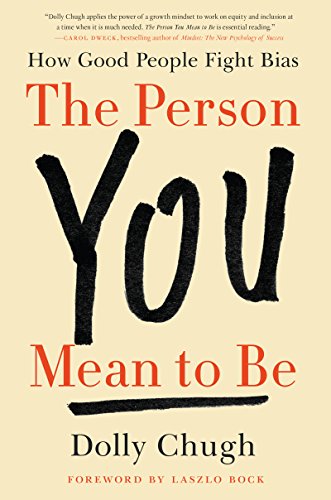
- Chugh, D. (2018). The Person You Mean to Be: How Good People Fight Bias. Harper Business.
- Crawford, D. E. (2025). Healing Bias: Your Guide to Individual, Interpersonal, and Institutional Change. W. W. Norton and Company.
- Fuller, P., Murphy, M., & Chow, A. (2023). The Leader’s Guide to Unconscious Bias: How To Reframe Bias, Cultivate Connection, and Create High-Performing Teams (trade paperback ed.). Simon & Schuster Paperbacks.
- Gaertner, S. L., & Dovidio, J. F. (2000). Reducing Intergroup Bias: The Common Ingroup Identity Model. Psychology Press.
- Halperin, E., Hameiri, B., & Littman, R. (Eds.). (2025). Psychological Intergroup Interventions: Evidence-Based Approaches to Improve Intergroup Relations. Routledge.
- Nordell, J. (2022). The End of Bias: A Beginning: How We Eliminate Unconscious Bias and Create a More Just World (paperback ed.). Metropolitan Books.
- Pittinsky, T. L. (2012). Us Plus Them: Tapping the Positive Power of Difference. Harvard Business Press.
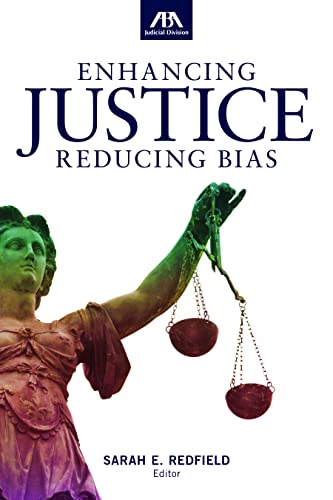
- Redfield, S. E. (Ed.). (2018). Enhancing Justice: Reducing Bias (paperback ed.). American Bar Association.
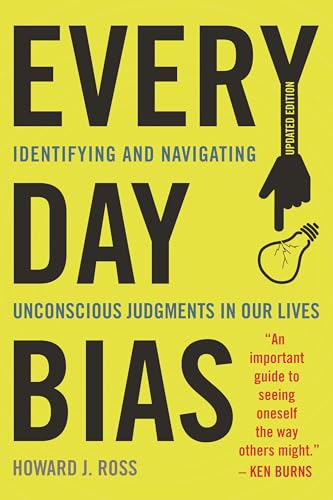
- Ross, H. J. (2020). Everyday Bias: Identifying and Navigating Unconscious Judgments in Our Daily Lives (updated ed.). Rowman & Littlefield.
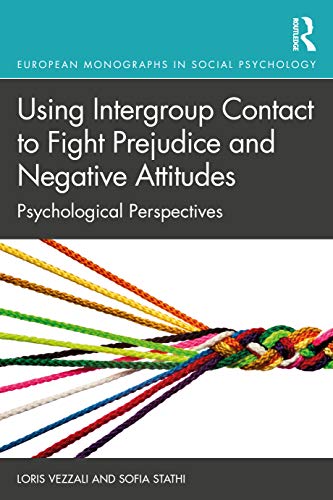
- Vezzali, L., & Stathi, S. (2021). Using Intergroup Contact to Fight Prejudice and Negative Attitudes: Psychological Perspectives.
- Yoshino, K., & Glasgow, D. (2025). Say the Right Thing: How to Talk About Identity, Diversity, and Justice. Simon Acumen.
Educational Approaches




- Adams, M., Bell, L. A., Goodman, D. J., Shlasko, D., Briggs, R. R., & Pacheco, R. (Eds.). (2023). Teaching for Diversity and Social Justice (4th ed.). Routledge.
- Aronson, E., & Patnoe, S. (2011). Cooperation in the Classroom: The Jigsaw Method (3rd ed.). London: Pinter & Martin, Ltd.
- Bergamaschi, A., & Pica, C. (Eds.). (2025). Intergroup Contact, Friendships and Prejudice Reduction in Multiethnic Schools and Communities. Routledge.
- Collado, W., Hollie, S., Isiah, R., Jackson, Y., Muhammad, A., Reeves, D., & Williams, K. C. (2021). Beyond Conversations About Race: A Guide for Discussions With Students, Teachers, and Communities. Solution Tree Press.
- Cuyjet, M. J., Linder, C., Howard-Hamilton, M. F., & Cooper, D. L. (Eds.). (2023). Multiculturalism on Campus: Theory, Models, and Practices for Understanding Diversity and Creating Inclusion (2nd ed.). Routledge.
- Gay, G. (2018). Culturally Responsive Teaching: Theory, Research, and Practice (3rd ed.). Teachers College Press.
- Harris, D. (2023). The Antiracist School Leader: What to Know, Say, and Do. Solution Tree Press.
- Holsinger, K. (2016). Teaching Justice: Solving Social Justice Problems Through University Education. Ashgate Publishing.
- Mallett, R. K., & Monteith, M. J. (Eds.). (2019). Confronting Prejudice and Discrimination: The Science of Changing Minds and Behaviors. Academic Press.
- Milner, H. R. (2020). Start Where You Are, But Don’t Stay There: Understanding Diversity, Opportunity Gaps, and Teaching in Today’s Classrooms (2nd ed.). Harvard Education Press.
- Myers-Lipton, S. (2022). CHANGE! A Guide to Teaching Social Action. Routledge.
Diversity, Equity, and Inclusion




- Brown, J. (2022). How to Be an Inclusive Leader: Your Role in Creating Cultures of Belonging Where Everyone Can Thrive. Berrett-Koehler Publishers.
- Capper, C. A. (2018). Organizational Theory for Equity and Diversity: Leading Integrated, Socially Just Education. Routledge.
- Davis, S. (2022). Diversity, Equity & Inclusion for Dummies. John Wiley & Sons.
- Harris, L. (2019). Diversity Beyond Lip Service: A Coaching Guide for Challenging Bias. Berrett-Koehler Publishers.
- Heinz, M., Rodríguez-Entrena, M. J., & Ruairc, G. M. (Eds.).(2025). Professional Learning for Diversity, Equity and Democracy: Big Ideas for Better Schools. Routledge.
- Mor Barak, M. E. (2022). Managing Diversity: Toward a Globally Inclusive Workplace (5th ed.). Sage Publications.
- Morukian, M. (2022). Diversity, Equity, and Inclusion for Trainers: Fostering DEI in the Workplace. ATD Press.
- Rodgers, J. O., & Kangas, L. L. (2022). Diversity Training That Generates Real Change: Inclusive Approaches That Benefit Individuals, Business, and Society. Berrett-Koehler Publishers.
- Thompson, J. R. (2022). Diversity and Inclusion Matters: Tactics and Tools to Inspire Equity and Game-Changing Performance. Wiley.
- Zheng, L. (2024). DEI Deconstructed: Your No-Nonsense Guide to Doing the Work and Doing It Right. Berrett-Koehler Publishers.
Cultivating Empathy






- Goldman, B. (2019). The Power of Kindness: Why Empathy Is Essential in Everyday Life (paperback ed.). HarperCollins.
- Howe, D. (2013). Empathy: What It Is and Why It Matters. New York: Palgrave Macmillan.
- Ickes, W. (Ed.). (1997). Empathic Accuracy. Guilford Press.
- Krznaric, R. (2015). Empathy: Why It Matters, and How to Get It (trade paperback ed.). Perigee.
- Mathabane, M. (2018). The Lessons of Ubuntu: How an African Philosophy Can Inspire Racial Healing in America. Skyhorse.
- Mclaren, K. (2013). The Art of Empathy: A Complete Guide to Life’s Most Essential Skill (paprback ed.). Sounds True.
- Riess, H., with Neporent, L. (2018). The Empathy Effect: Seven Neuroscience-Based Keys for Transforming the Way We Live, Love, Work, and Connect Across Differences. Sounds True.
- Szalavitz, M., & Perry, B. D. (2011). Born for Love: Why Empathy Is Essential—and Endangered (paperback ed.). Harper.
- Turkle, S, (2022). The Empathy Diaries: A Memoir. Penguin Books.
- Ventura, M. (2019). Applied Empathy: The New Language of Leadership. Atria Paperback.
- Zaki, J. (2020). The War for Kindness: Building Empathy in a Fractured World. Broadway Books.
Activism and Social Change


- Bornstein, D. (2007). How to Change the World: Social Entrepreneurs and the Power of New Ideas (updated ed.). Oxford University Press.
- Brown, M. J. (2007). Building Powerful Community Organizations: A Personal Guide to Creating Groups that Can Solve Problems and Change the World. Long Haul Press.
- Cekic, Ö. (2020). Overcoming Hate Through Dialogue: Confronting Prejudice, Racism, and Bigotry with Conversation―and Coffee. Mango.
- Cheng-Tozun, D. (2023). Social Justice for the Sensitive Soul: How to Change the World in Quiet Ways. Broadleaf Books.
- Cooney, N. (2011). Change of Heart: What Psychology Can Teach Us About Spreading Social Change. Lantern Books.
- Dutta, M. J., & Zapata, D. B. (Eds.). (2019). Communicating for Social Change: Meaning, Power, and Resistance. Palgrave Macmillan.
- Garza, A. (2021). The Purpose of Power: How We Come Together When We Fall Apart (trade paperback ed.). One World.
- Han, H., McKenna, E., & Oyakawa, M. (2021). Prisms of the People: Power & Organizing in Twenty-First-Century America. University of Chicago Press.
- Mueller, L. (2024). The New Science of Social Change: A Modern Handbook for Activists. Beacon Press.
- Myers-Lipton, S. (2023). CHANGE! A Student Guide to Social Action (2nd ed.). Routledge.
- Solnit, R. (2016). Hope in the Dark: Untold Histories, Wild Possibilities (3rd ed.). Haymarket Books.
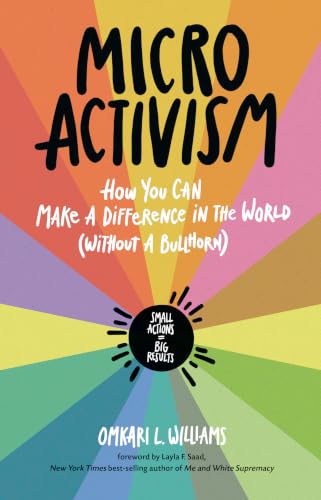
- Williams, O. L. (2023). Micro Activism: How You Can Make a Difference in the World Without a Bullhorn. Storey Publishing.
Scholarly Journals
Magazines and E-Zines
Activism and Antiracism
- Adbusters (magazine and network of social justice activists)
- ColorLines (magazine on race, culture, and organizing)
- Common Dreams (igniting change for the common good)
- Dissent (magazine on political argument and ideas)
- Geez (print and digital magazine on contemplative cultural resistance)
- In These Times (biweekly magazine of news, opinion, and politics)
- SCLC Magazine (civil rights magazine published since 1971)
- shado (print + online magazine on social justice and collective liberation)
- The EDU Ledger (previously Diverse: Issues in Higher Education)
- The Multiracial Activist (social and civil liberty e-zine)
- The Forge (building progressive connections and community)
- The Progressive (magazine on peace, social justice, and political change)
- YES! (“solutions journalism” aimed at systemic, structural change)
Social Justice
- Affinity Magazine (teen journalism on social justice, politics, and culture)
- Commonweal (Catholic magazine on politics, religion, and social justice)
- Greater Good Magazine (broad coverage on diversity and social justice)
- Learning for Justice (magazine of the Southern Poverty Law Center)
- Rethinking Schools (magazine and social justice organization)
- Sojourners (Christian magazine and organization devoted to social justice)
- Solstice (magazine dedicated to amplifying marginalized voices)
- The Homeless Advocate (on homelessness, inequality, and advocacy)
- The Sun (independent, ad-free magazine covering social justice)
- The Upstream Journal (on human rights and social justice)
Videos
The following videos relate to prejudice reduction, bystander intervention, and ways to advance social justice.

After Black Lives Matter protests across the U.S., widespread mistreatment of migrants at the Southern border, hate speech directed at Asian Americans, Jews, and Muslims, and coordinated efforts to limit transgender rights, it’s vitally important to find effective techniques for reducing prejudice. In this video, Professor Betsy Paluck—a Princeton University social psychologist and one of the world’s foremost experts on prejudice reduction—reviews research on what works and what doesn’t.
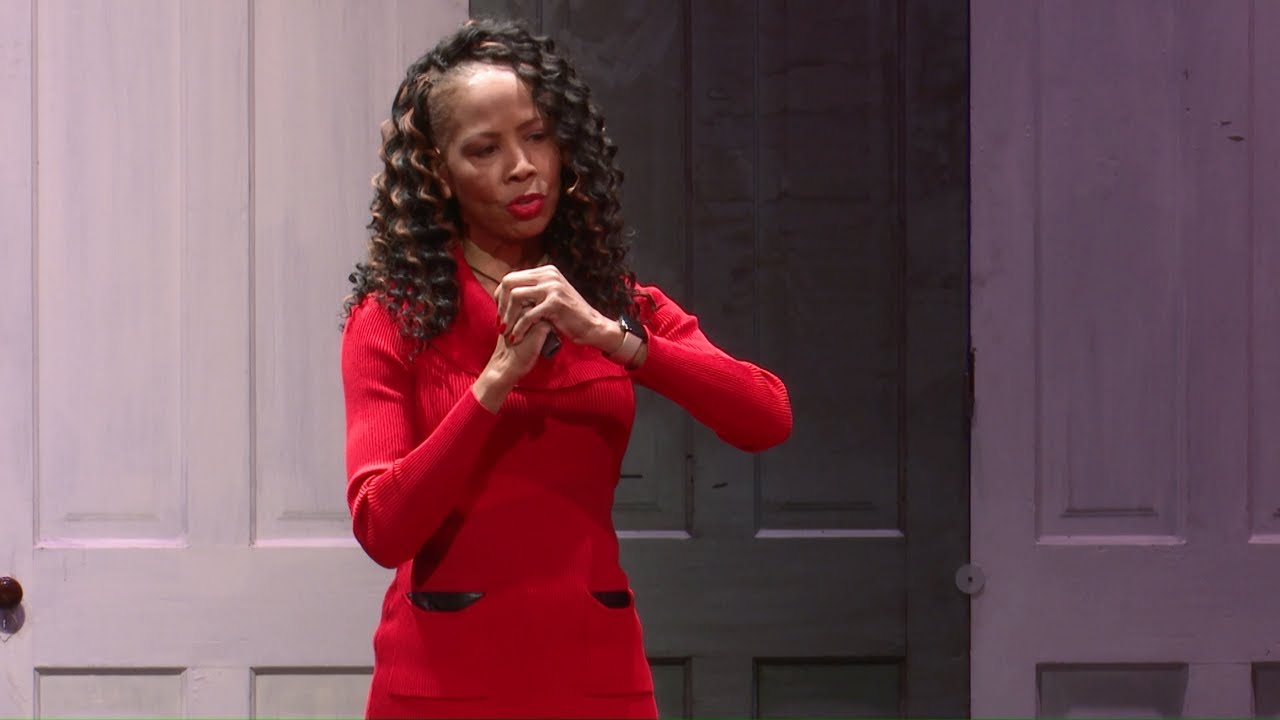
What Dentistry Teaches Us About Reducing Prejudice
Book author, newspaper columnist, television host, and dentist Monica Anderson delivers a surprising two-pronged message in this TEDx talk: (1) the aversion many people have to dentists is similar in some ways to racism, and (2) some of the most effective health strategies used in dentistry can also be used to prevent and reduce prejudice.

Under the Surface: How Empathy Might Reduce Prejudice
One way to reduce prejudice is by cultivating empathy and the ability to take the perspective of others, imagining how things look and feel from their position. In this video, we see ordinary people going about their day but with a twist: we’re shown what each person is privately dealing with under the surface of how they appear. Equipped with that information, we not only see their humanity—it becomes easier to empathize and treat them with kindness. Yet the people we see in this video aren’t that different from people we might encounter in daily life, which raises a question: Why not treat everyone as though they have challenges under the surface, which most people undoubtedly do?

Outrageous Acts for Simple Justice
In this video, feminist author Gloria Steinem challenges viewers to try an experiment: commit one act per day for simple justice and see what happens. The act might be as brief as speaking out when witnessing an injustice, or as large as running for office. “I don’t care what it is; only you know what it should be,” says Steinem, but “I hope that everybody watching … will do at least one outrageous thing tomorrow, and the next day, and the next.”

Student Won’t Pledge Allegiance Until All Have Liberty and Justice
In this CNN interview, Arkansas 5th grader Will Phillips explains why he refused to recite the pledge of allegiance at school: “I looked at the end [of the pledge], and it said ‘with liberty and justice for all,’ and there really isn’t liberty and justice for all… Gays and lesbians can’t marry. There’s still a lot of racism and sexism.”

Wangari Maathai: “I Will Be a Hummingbird”
In this clip about activism from DIRT! The Movie, Nobel Peace Prize winner Wangara Maathai tells the story of a hummingbird who, drop by drop, works to extinguish a huge forest fire. When other animals claim that the bird too small to make a difference, the hummingbird responds, “I am doing the best I can!” Maathai, who fought deforestation effectively herself in Kenya by planting trees seed by seed, calls on viewers to be hummingbirds even when they feel insignificant or overwhelmed.

Would You Protest Anti-Immigrant Mistreatment?
This clip shows a hidden camera experiment from the ABC News program What Would You Do? with John Quiñones. In staged interactions, an impatient customer loudly mistreats an immigrant employee who is washing the customer’s car. Several bystanders, who don’t know that the customer and employee are actors, intervene to stop the abuse. In the final and most remarkable scene, it turns out that the bystander who intervened was, herself, an immigrant, and her intensely personal reaction shows why it’s so important to counter prejudice and injustice.
For more hidden camera episodes from What Would You Do?, see:

How to Tell People They Sound Racist
Jay Smooth, founder of the hip-hop radio show Underground Railroad, offers advice on responding to racism. “The most important thing,” he says, is to “remember the difference between the ‘what they did’ conversation and the ‘what they are’ conversation.” He describes the first conversation as useful and the second as “a rhetorical Bermuda Triangle where everything drowns in a sea of empty posturing.”
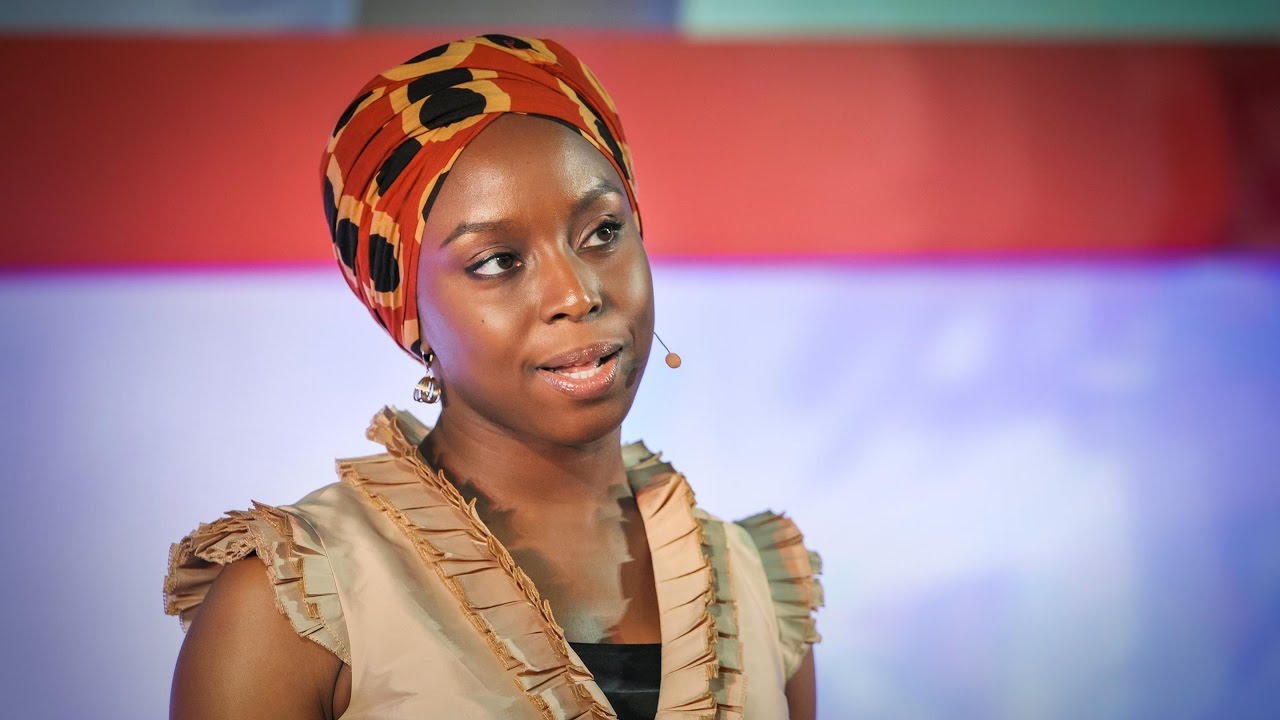
In this much-watched TED talk, Nigerian writer Chimamanda Ngozi Adichie explains the danger of telling only a single story about people and culture: the fueling of stereotypes and the limiting of one’s sense of what’s possible. Single stories, told over and over, also run the risk of shaping behavior and becoming self-fulfilling prophecies The solution? Multiple storytellers—including you—telling diverse stories from multiple points of view. As she says in this video: “Stories can break the dignity of a people, but stories can also repair that broken dignity … when we reject the single story, when we realize that there is never a single story about any place, we regain a kind of paradise.”
Additional Resources and Searchable Databases
YouTube channels:
For other films, clips, and reviews, please see:
Web Links
Reducing Bias
Social Justice Programs and Ideas
- Brownicity (designs educational experiences that foster connection)
- Center to Combat Hate (uses litigation and advocacy to fight hate)
- Crime and Justice Institute (division of Community Resources for Justice)
- Elimination of Prejudice Foundation (nonprofit public charity)
- Learning for Justice (project of the Southern Poverty Law Center)
- Prejudice Reduction Evidence Database (Princeton University)
- Prejudice Unfolded (educating and combating various forms of prejudice)
- Reducing Stereotype Threat (teaching resources)
- Rising Up with Sonali (“solutions journalism” for social justice)
- Teaching People’s History (Zinn Education Project)
Student and School-Based Interventions
- AmazeWorks (anti-bias teaching tools, programs, and more)
- Facing History & Ourselves (uses history to reduce prejudice)
- Jigsaw Classroom (supported by decades of research)
- Mix It Up at Lunch (helping students cross social boundaries)
- Rethinking Schools (promoting equity in public education)
- School Tools (teaching resources to foster awareness and empathy)
- Teaching for Change (building social justice in the classroom)
Anti-Bias Parenting
- Anti-Bias Resources for Families (age-appropriate guides and articles)
- Anti-Racism Resources for Parents and Kids (Harvard University)
- Beyond the Golden Rule (downloadable anti-bias parenting guide)
- Everyday Revolutionary Parenting (social justice parenting resources)
- Feminist Parenting (from the anti-violence group Zero Tolerance)
- Parenting for Social Justice (bibliography and online ordering store)
- Raising Anti-Racist Children (American Psychological Association)
- Raising Antiracist Kids (guidance for raising bold little changemakers)
Diversity Training and Consulting
- Basic Diversity (training, assessment, and strategic development)
- Diversity Training Group (offers diversity training and consulting)
- Diversity Training University International (focused on psychology)
- Free Diversity, Equity, and Inclusion Courses (from NonprofitReady)
- Global Diversity Practice (focuses on DEI, unconscious bias, and more)
- National Psychology Training Consortium (doctoral psychology internships)
- Test your DEI IQ (quiz for leaders to assess DEI understanding)
Community Approaches
Community Building and Development
- Community Action Partnership (addressing causes and conditions of poverty)
- Community Action Program Legal Services (national network)
- Community Change (empowering low-income people and communities)
- Community Resources for Justice (includes Crime and Justice Institute)
- National Association for State Community Services Programs (antipoverty network)
- National Community Action Foundation (antipoverty advocacy and lobbying)
- Not in Our Town (fighting hate and working for inclusive communities)
- The Greenling Institute (an antidote to the practice of redlining)
U.S. Government Community Resources
- Administration for Community Living (Health and Human Services)
- American Community Survey (U.S. Census Bureau)
- American Housing Survey (U.S. Census Bureau)
- Community Oriented Policing Services (Department of Justice)
- My Community / My Facility (provides a wealth of local data)
- Office of Community Planning and Development (HUD)
- Office of Community Services (Health and Human Services)
- Search for Superfund Sites Where You Live (EPA)
- Where You Live: Community Information (EPA)
Activism Tips and Resources
Social and Political Activism
- 5 Calls (make 5 calls to U.S. representatives in 5 minutes)
- Common Cause (strengthening activism and democracy)
- Freedom of Information Act (start your FOIA journey)
- GovTrack (tracking U.S. federal bills, votes, and more)
- Movement Voter Project (donor network for advocacy groups)
- MuckRock (nonprofit helping submit FOIA requests)
- Open Government Guide (protecting freedom of the press)
- OpenSecrets (tracking money and its political effects)
- Quotes on Activism (compendium from Goodreads)
- SpeakOut (speakers agency making a social difference)
- Tools for Activists (National Coalition Against Censorship)
Online Petitions to Create Change
- AVAAZ (bringing people-powered politics to decision-making)
- Care2.com (sign or create petitions for social justice and more)
- Change.org (start campaign and mobilize supporters around the world)
- Mobilize.us (events, petitions, and volunteer opportunities)
- MoveOn (progressive action network offering petition tips and tools)
- openPetition (helping people bring about change)
- Race and Slavery Petitions Project (searchable historic archive)
Other Prejudice Reduction Resources
- Approaches to Prejudice Reduction (Wikipedia overview)
- Kick it Out (working to end all forms of discrimination in sports)
- National Issues Forums Institute (promotes civic dialogue)
- Project Implicit (international nonprofit focused on implicit bias)
- Resource Generation (wealthy young people challenging class privilege)
- Resources to Unlearn Implicit Bias (compendium from MSW Online)
- Solutions Journalism Network (reports how people are solving problems)
- Tackling Hate (research-based solutions to tackle prejudice and hate)
- Together for Social Justice (resources on a wide range of justice topics)
Other Publications
Newsletters and E-Letters
- Community Change Action Newsletter (email-based)
- endprejudice Newsletter (crafting a future without prejudice)
- Facing History and Ourselves (offers multiple newsletters)
- Greenlining Institute Newsletter (free e-letter)
- Learning for Justice Newsletter (Southern Poverty Law Center)
- National Network for Immigrant and Refugee Rights Newsletter (free)
- Poverty & Race Research Action Council (e-news and updates)
- RainbowPUSH Coalition Newsletter (available online)
- Rising Up With Sonali (free e-letter)
- The Multiracial Activist Newsletter (digest of news, events, and more)
Articles, Essays, and Reports
Research Reviews on Prejudice Reduction
- Axt, J., & To, J. (2025). How can debiasing research aid efforts to reduce discrimination? Personality and Social Psychology Review, 29(1), 81-105.
- Čehajić-Clancy, S., & Halperin, E. (2024). Advancing research and practice of psychological intergroup interventions. Nature Reviews Psychology, 3, 574-588.
- Chaney, K. E., Sanchez, D. T., Alt, N. P., & Shih, M. J. (2021). The breadth of confrontations as a prejudice-reduction strategy. Social Psychological and Personality Science, 12(3), 314-322.
- Chen, R., & White, F. A. (2024). The future of prejudice reduction research: A critical review of the role of virtual reality (VR). Computers in Human Behavior, 152, 108073.
- Devine, P. G., Ash, T. L., & Scott, K. E. (2025). Prejudice reduction. In D. T. Gilbert, S. T. Fiske, E. J. Finkel, & W. B. Mendes (Eds.), The handbook of social psychology (6th ed.). Situational Press.
- Donaldson, S. I., Villalobos, J. P., & Cho, M. (2025). Following the science to understand how to reduce prejudice and its harmful consequences: A guide for evaluators and program planners. Evaluation and Program Planning, 110, 102556.
- FitzGerald, C., Martin, A., Berner, D., & Hurst, S. (2019). Interventions designed to reduce implicit prejudices and implicit stereotypes in real world contexts: A systematic review. BMC Psychology, 7:29.
- Hsieh, W., Faulkner, N., & Wickes, R. (2021). What reduces prejudice in the real world? A meta-analysis of prejudice reduction field experiments. British Journal of Social Psychology, 61(3), 689-710.
- Paluck, E. L., & Green, D. P. (2009). Prejudice reduction: What works? A review and assessment of research and practice. Annual Review of Psychology, 60, 339-367.
- Paluck, E. L., Porat, R., Clark, C. S., & Green, D. P. (2021). Prejudice reduction: Progress and challenges. Annual Review of Psychology, 72, 533-560.
- Rösler, I. K., & Amodio, D. M. (2022). Neural basis of prejudice and prejudice reduction. Biological Psychiatry: Cognitive Neuroscience and Neuroimaging, 7(12), 1200-1208.
- Verkuyten, M., Yogeeswaran, K., & Adelman, L. (2020). Toleration and prejudice‐reduction: Two ways of improving intergroup relations. European Journal of Social Psychology, 50(2), 239-255.
Empathy and Perspective Taking
- Bobba, B., & Crocetti, E. (2022). “I feel you!”: The role of empathic competences in reducing ethnic prejudice among adolescents. Journal of Youth and Adolescence, 51, 1970-1982.
- Chen, V. H. H., & Ibasco, G. C. (2023). All it takes is empathy: How virtual reality perspective-taking influences intergroup attitudes and stereotypes. Frontiers in Psychology, 14:1265284.
- DeBerry, J. A., Adams, E. M., Cascalheira, C. J., & Hitter, T. L. (2023). The effectiveness of didactic and perspective-taking interventions on reducing multiple dimensions of heterosexism. Journal of Homosexuality, 70(10), 2295-2318.
- Gabrielli, S., Catalano, M. G., Maricchiolo, F., Paolini, D., & Perucchini, P. (2022). Reducing implicit prejudice towards migrants in fifth grade pupils: Efficacy of a multi-faceted school-based program. Social Psychology of Education, 25, 425-440.
- Hecht, M., Kloß, A., & Bartsch, A. (2022). Stopping the stigma. How empathy and reflectiveness can help reduce mental health stigma. Media Psychology, 25(3), 367-386.
- Kalla, J. L., & Broockman, D. E. (2023). Which narrative strategies durably reduce prejudice? Evidence from field and survey experiments supporting the efficacy of perspective-getting. American Journal of Political Science, 67, 185-204.
- Laurin, R., & Bernache-Assollant, I. (2026). Perspective taking and sexism in job interviews: Effect of self/other perspective taking and traditional/immersive media. International Journal of Human–Computer Interaction, 42(4), 2717-2734.
- Martin, K. J., & Johnson, K. L. (2024). You can’t dismantle what you don’t recognize: The effect of learning critical Black history in healthcare on perspective-taking. Journal of Experimental Psychology: General, 153(11), 2631-2641.
- Matera, C., Nerini, A., Di Gesto, C., Policardo, G. R., Maratia, F., Dalla Verde, S., … & Brown, R. (2021). Put yourself in my wheelchair: Perspective‐taking can reduce prejudice toward people with disabilities and other stigmatized groups. Journal of Applied Social Psychology, 51(3), 273-285.
- Soral, W., Malinowska, K., & Bilewicz, M. (2022). The role of empathy in reducing hate speech proliferation. Two contact-based interventions in online and off-line settings. Peace and Conflict: Journal of Peace Psychology, 28(3), 361-371.
- Stel, M., & Unterweger, A. (2025). Towards sustainability by reducing speciesism: The effect of a prejudice-based intervention on people’s attitudes and behaviours towards animals. British Journal of Social Psychology, 64(2), e12864.
- Weyant, J. (2019). Reducing implicit bias toward non-native speakers of English via perspective taking. Hispanic Journal of Behavioral Sciences, 41(4), 542-549.
Diversity Training
- Arslan, C., Chang, E. H., Chilazi, S., Bohnet, I., & Hauser, O. P. (2025). Behaviorally designed training leads to more diverse hiring. Science, 387(6732), 364-366.
- Ash, T. L., & Maguire, S. C. (2024). A scoping review of diversity training for teachers: The potential for school psychology. School Psychology Review, 53(4), 382-399.
- Devine, P. G., & Ash, T. L. (2022). Diversity training goals, limitations, and promise: A review of the multidisciplinary literature. Annual Review of Psychology, 73, 403-429.
- He, J. C., Keller, B. B., & Kang, S. K. (2025). Bridging individual-level and system-level approaches to advance psychology-based diversity initiatives. Nature Reviews Psychology, 4, 702-717.
- Lai, C. K., & Lisnek, J. A. (2023). The impact of implicit-bias-oriented diversity training on police officers’ beliefs, motivations, and actions. Psychological Science, 34(4), 424-434.
- Onyeador, I. N., Hudson, S. K. T., & Lewis Jr., N. A. (2021). Moving beyond implicit bias training: Policy insights for increasing organizational diversity. Policy Insights from the Behavioral and Brain Sciences, 8(1), 19-26.
- Wang, M. L., Gomes, A., Rosa, M., Copeland, P., & Santana, V. J. (2024). A systematic review of diversity, equity, and inclusion and antiracism training studies: Findings and future directions. Translational Behavioral Medicine, 14(3), 156-171.
- Weiss, C. M., Ran, S., & Halperin, E. (2023). Educating for inclusion: Diversity education programs can reduce prejudice toward outgroups in Israel. Proceedings of the National Academy of Sciences, 120 (16), 1-7.
- Taylor, W., & Cox, L. (2023). Developing scientifically validated bias and diversity trainings that work: Empowering agents of change to reduce bias, create inclusion, and promote equity. Management Decision, 61(4), 1038-1061.
Other Topics
- Chen, R., & White, F. A. (2023). The future of prejudice reduction research: A critical review of the role of virtual reality (VR). Computers in Human Behavior, 152, 108073.
- Dorsey, C., Kim, P., Daniels, C., Sakau, L., & Savage, B. (2020, May 4). Overcoming the racial bias in philanthropic funding. Stanford Social Innovation Review.
- Hatch, H. A., Warner, R. H., Grundy, M. R., & Heck, K. B. (2025). Effectiveness of interventions for transgender prejudice reduction: A meta-analysis. Sex Roles, 91, 17.
- Hoyt, C. L., & Burnette, J. L. (2025). How mindsets can mitigate or sustain prejudice. Current Directions in Psychological Science, 34(2), 82-87.
- Killen, M. (2024, April 16). The science of reducing prejudice in kids. Scientific American, 330(5), pp. 52-.
- Nalls, A. J., & Wickerd, G. (2023). The jigsaw method: Reviving a powerful positive intervention. Journal of Applied School Psychology, 39(3), 201-217.
- Pereira da Costa, L., Bierwiaczonek, K., & Bianchi, M. (2024). Does digital intergroup contact reduce prejudice? A meta-analysis. Cyberpsychology, Behavior, and Social Networking, 27(7), 440-451.
- Sanders, C. A., Rose, H., Booker, J. A., & Kind, L. A. (2021). Claiming the role of positive psychology in the fight against prejudice. Journal of Positive Psychology, 18(1), 61-74.
- UN Office of the High Commissioner for Human Rights. (2021). Reparatory Justice for Africans and People of African Descent: A Series of Explainers.
- UN Women. (2024). Addressing Stigma and Discrimination to Eliminate Violence Against Women With Disabilities (policy paper).