
Slavery and the
U.S. Presidents
Racial Prejudice Beyond the Presidents

It’s important to note that U.S. presidents were not alone in their views of slavery and race. Other government institutions, including Congress and the Supreme Court, expressed similar views. For instance, in its Dred Scott decision, the U.S. Supreme Court ruled that Black people “had no rights which the white man was bound to respect.”
When the federal government moved from Philadelphia to Washington in 1801, one could sit on the steps of the Capitol building and watch slave men, women, and children march in chains to holding pens where they were kept until sold. In fact, the U.S. Capitol building itself—known worldwide as a symbol of freedom—was built in part with slave labor. As sociologist Joe Feagin and his colleagues have pointed out:
It was enslaved African Americans who put the statue of Freedom at the top of the Capitol dome in the 1860s … Those who cast the statue, loaded its pieces onto wagons, assembled it, and hoisted it to the top of the Capitol building were African American workers who did not possess the freedom they were helping to celebrate.

After the End of U.S. Slavery
Even after slavery ended, many presidents and members of Congress continued to openly display racial prejudice. For example, in an April 25, 1898, speech to Congress, Representative David De Armond said that Black voters “are almost too ignorant to eat, scarcely wise enough to breathe.” Likewise, on February 26, 1900, Senator Ben Tillman claimed that Black people were “unfit for suffrage,” and he confessed: “We stuffed ballot boxes. We shot them. We are not ashamed of it.”
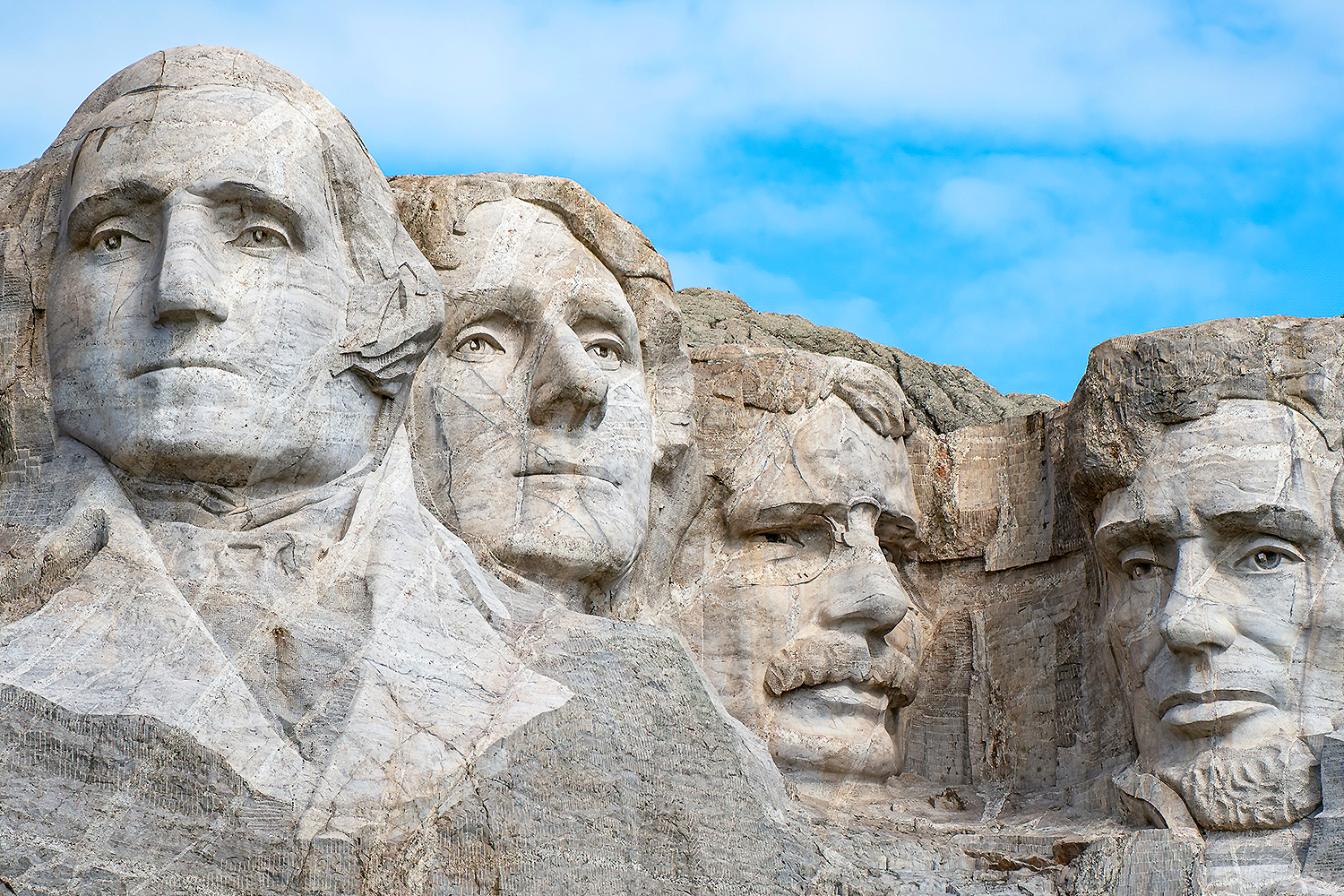
In July of 1895, President Theodore Roosevelt referred to Black people as a “perfectly stupid race,” and in 1911 Harry Truman said that “negros ought to be in Africa, yellow men in Asia and white men in Europe and America.” Later, President Dwight Eisenhower said that social equality did not mean “that a Negro should court my daughter,” Richard Nixon referred to Black people as “just down out of the trees,” and Ronald Reagan called the Civil Rights Act of 1964 “a bad piece of legislation” that “infringed on the individual rights of citizens.”
To read more about U.S. slavery, race relations, segregation, and related topics, please see the next page.