
Slavery and the
U.S. Presidents

Especially Harsh Treatment
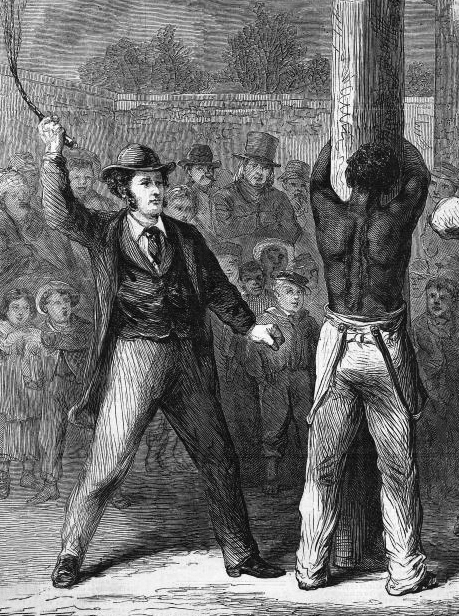
Some of the presidents were unusually hard on their slaves. George Washington, for example, required fieldwork of slave children starting around age 11, and he employed slave catchers to retrieve runaways. He also shipped a slave to the West Indies in exchange for molasses and rum, ordering that the slave be handcuffed to prevent escape.
Thomas Jefferson hired slave overseers who were cruel even by the standards of the day. For example, between 1801 and 1805 Jefferson employed Gabriel Lilly, who once whipped a 17-year-old slave three times in one day despite the slave being too ill to raise “his hand to his Head.” Jefferson also had a runaway slave brought back in irons and “severely flogged in the presence of his old companions.”
Andrew Jackson
Andrew Jackson instructed his overseer that “subordination must be obtained first, and then good treatment.” This order of priorities was reflected after a family maid misbehaved and Jackson told his overseer to “take her to the public whipping post and give her fifty lashes” at the first sign of future disobedience. The maid’s misdeed was that she did laundry for someone outside the Jackson family.
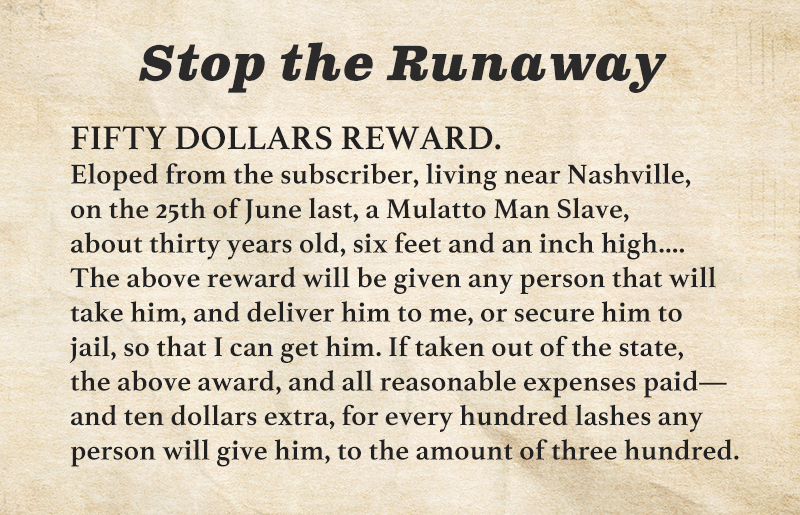
In another case, Jackson ordered a cover-up when one of his slaves was mistreated: “You may say to Doctor Hogg, that her lameness was occasioned by a stroke from Betty, or jumping over a rope, in which her feet became intangled, and she fell.” Jackson also took out an advertisement in the Tennessee Gazette to recapture a runaway slave, offering slave catchers money to whip the slave 300 times.
James Knox Polk
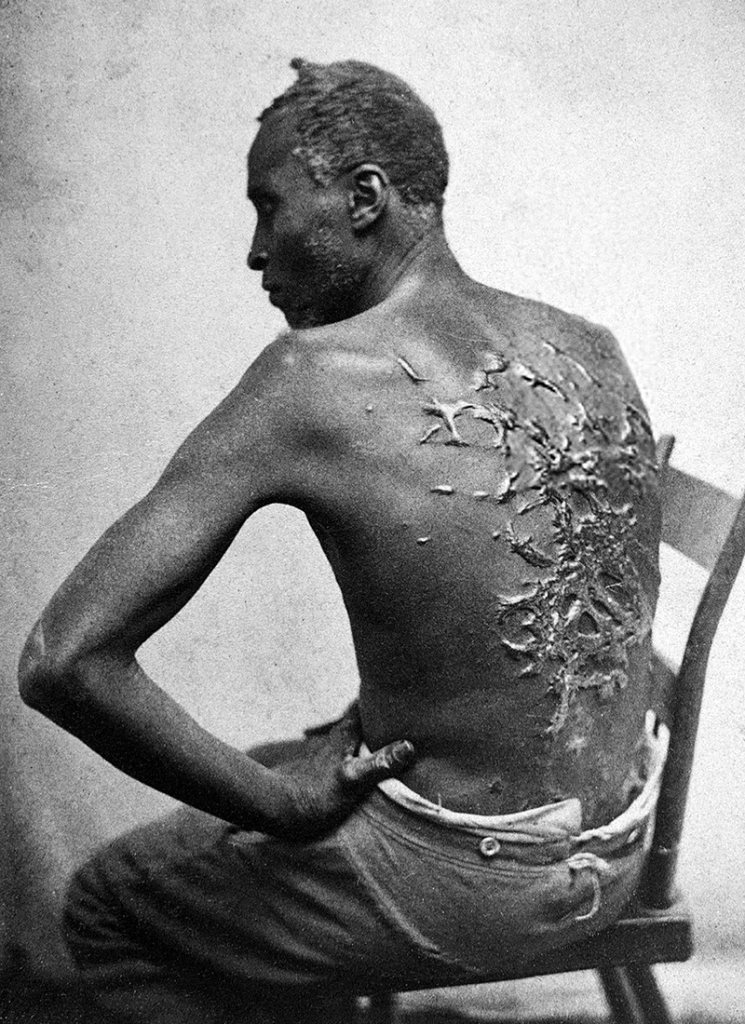
James Polk was the last president to whip and beat his slaves. In one instance, Polk’s overseer, Ephraim Beanland, administered 100 lashes to one slave and 200 to another, in the latter case rubbing salt in the wounds four or five times. Soon after this episode, a slave named Elizabeth killed her newborn baby, presumably to protect it from a life of misery. (According to Polk’s brother-in-law, Silas Caldwell, “She smothered it somehow. No person knew it was dead until this morning. It was a very fine child.”)
Yet Polk continued to employ Beanland, who subsequently wrote him on April 1, 1834, about a conflict with a slave in which Beanland “stabed him 2 with my nife and I brought him backe to the house and chainde him and I have him in chaines yet.”
Even after this stabbing, Polk wrote to his wife Sarah on September 26, 1834: “I am resolved to send my hands to the South, have given money to James Brown to buy a place & have employed Beanland as an overseer. I am determined to make more money … The negroes have no idea that they are going to be sent to the South and I do not wish them to know it, and therefore it would be best to say nothing about it at home.”
It was not until the end of 1835 that Beanland’s employment was terminated—not by Polk, but by Caldwell, who was dissatisfied with Beanland’s productivity. Polk then hired other overseers who continued to brutalize his slaves. For example, on July 23, 1841, Caldwell wrote to Polk: “Your Boy Addison has run away from your farm and is at my house. From the wounds that are on his neck & arms it appears that the Overseer intended to kill Him.”