
Slavery and the
U.S. Presidents
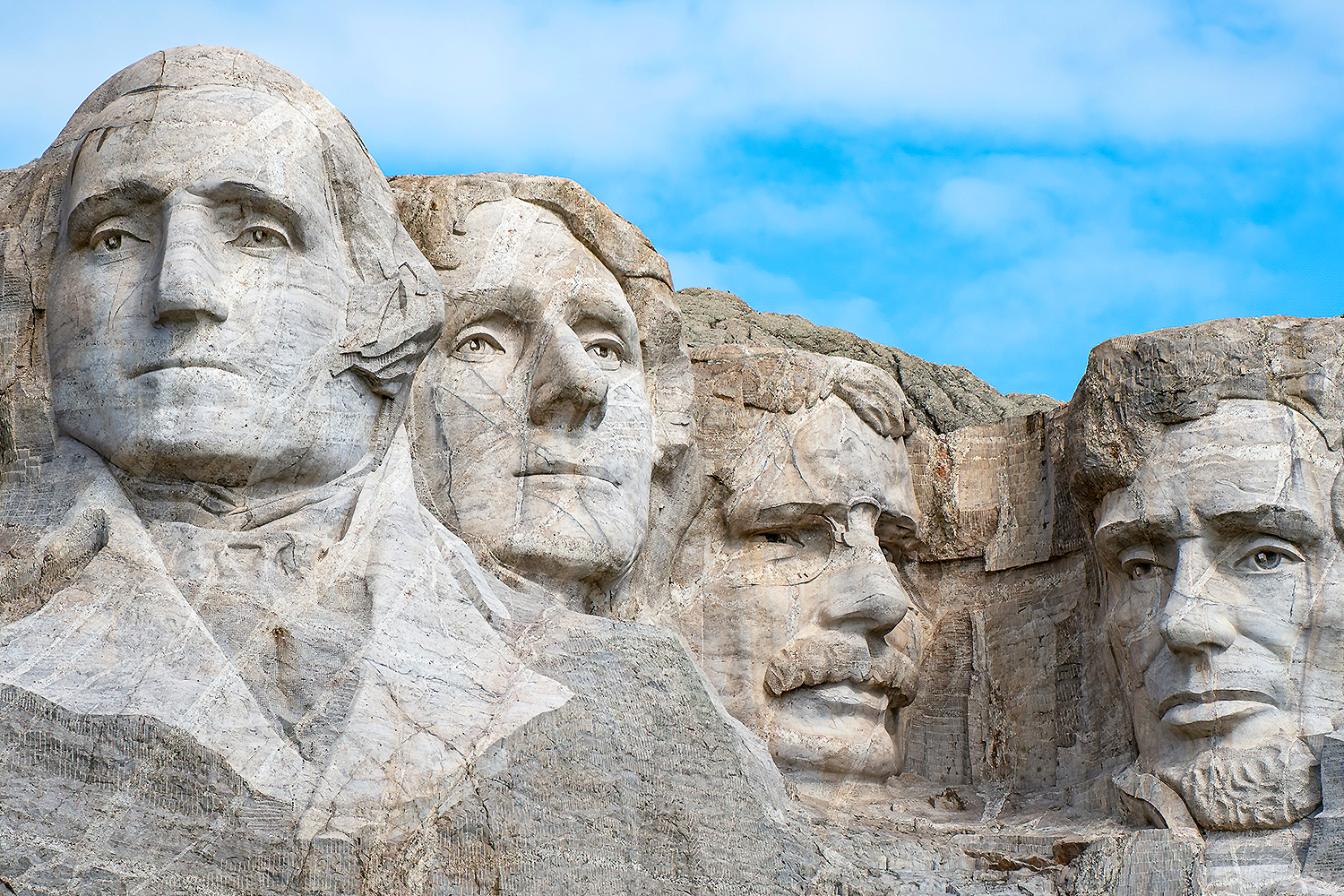
Presidents Who Were Especially Hard on Slaves
Washington shipped a slave for molasses and rum:
Pages 211–212 of Ford, W. C. (Ed.). (1889). The writings of George Washington (vol. 2, 1758–1775). New York: G. P. Putnam’s Sons.
Washington required fieldwork of children:
Page 138 of Dalzell, R. F., Jr., & Dalzell, L. B. (1998). George Washington’s Mount Vernon: At home in revolutionary America. New York: Oxford University Press.
Washington employed slave catchers:
Pages 341–342 of Runge, B. H. (Ed.). (1995). The papers of George Washington (Colonial Series, vol. 10, March 1774–June 1775). Charlottesville, VA: University of Virginia Press.
Jefferson hired slave overseers who were cruel:
Page 29 of Stanton, L. (1996). Slavery at Monticello. Richmond, VA: Thomas Jefferson Memorial Foundation.
“Subordination must be obtained”:
Page 158 of Bassett, J. S. (Ed.). (1928). Correspondence of Andrew Jackson (vol. 3, 1820–1828). Washington, DC: Carnegie Institution of Washington.
“Take her to the whipping post”:
Page 87 of Bassett, J. S. (Ed.). (1928). Correspondence of Andrew Jackson (vol. 3, 1820–1828). Washington, DC: Carnegie Institution of Washington.
Jackson cover-up:
Page 74 of Bassett, J. S. (Ed.). (1931). Correspondence of Andrew Jackson (vol. 5, 1833–1838). Washington, DC: Carnegie Institution of Washington.
Jackson advertisement for runaway slave:
Page 51 of Remini, R. V. (1984). Andrew Jackson and the course of American democracy, 1833–1845 (vol. 3). New York: Harper & Row.
100 lashes to one slave and 200 to another:
Page 176 of Weaver, H., & Bergeron, P. H. (Eds.). (1972). Correspondence of James K. Polk (vol. 2, 1833–1834). Nashville, TN: Vanderbilt University Press.
Rubbing salt in the wounds:
Page 204 of Weaver, H., & Bergeron, P. H. (Eds.). (1972). Correspondence of James K. Polk (vol. 2, 1833–1834). Nashville, TN: Vanderbilt University Press.
A slave named Elizabeth:
Page 220 of Weaver, H., & Bergeron, P. H. (Eds.). (1972). Correspondence of James K. Polk (vol. 2, 1833–1834). Nashville, TN: Vanderbilt University Press.
Polk continued to employ Beanland:
Pages 378–379 of Weaver, H., & Bergeron, P. H. (Eds.). (1972). Correspondence of James K. Polk (vol. 2, 1833–1834). Nashville, TN: Vanderbilt University Press.
Polk wrote to his wife:
Page 509 of Weaver, H., & Bergeron, P. H. (Eds.). (1972). Correspondence of James K. Polk (vol. 2, 1833–1834). Nashville, TN: Vanderbilt University Press.
It was not until the end of 1835:
Page 88 of Bassett, J. S. (1925/1968). The Southern plantation overseer as revealed in his letters. Westport, CT: Negro Universities Press.
Caldwell wrote to Polk:
Page 715 of Cutler, W. (Ed.). (1979). Correspondence of James K. Polk (vol. 5, 1839–1841). Nashville, TN: Vanderbilt University Press.