
Slavery and the
U.S. Presidents
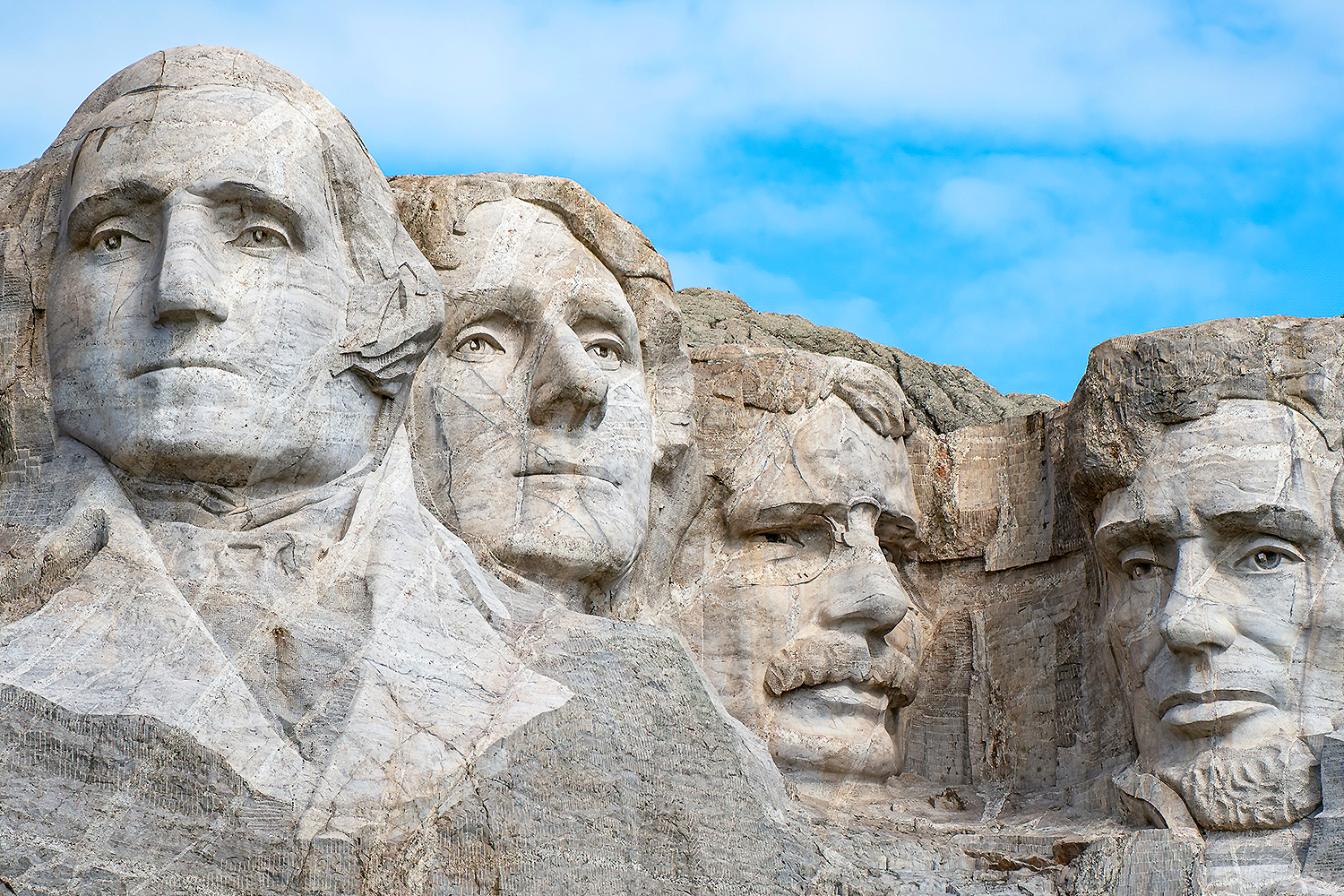
Each President’s Record on Slavery

John Tyler
Letter to his son Robert Taylor, March 12, 1850:
Page 481 of Tyler, L. G. (1885). The letters and times of the Tylers (vol. 2). Richmond, VA: Whittet & Shepperson.
When Tyler was a member of Congress:
Pages 326 of Tyler, L. G. (1884). The letters and times of the Tylers (vol. 1). Richmond, VA: Whittet & Shepperson.
Tyler argued that the extension of slavery:
Pages 317-318 of Tyler, L. G. (1884). The letters and times of the Tylers (vol. 1). Richmond, VA: Whittet & Shepperson.
Tyler auctioned off a favorite house slave:
Page 103-104 of Seager, R., Jr. (1963). And Tyler too: A biography of John & Julia Gardiner Tyler. New York: McGraw-Hill.
James Knox Polk:
He referred to abolitionists as:
Page 349 of Sellers, C. G. (1957). James K. Polk, Jacksonian, 1795-1843. Princeton, NJ: Princeton University Press.
“A slave dreads the punishment of stripes”:
Page 824 of U.S. Congress. (1830, April 27). Register of debates in Congress, comprising the leading debates and incidents of the first session of the Twenty-First Congress (vol. 6). Washington, DC: Gales and Seaton.
Zachary Taylor:
Letter to Jefferson Davis, July 27, 1847:
Page 4 of letter from Zachary Taylor to Jefferson Davis, July 27, 1847, in Zachary Taylor Papers. (1958). Presidential Papers Microfilm (Reel 1, Series 2: 1814-1850). Washington, DC: Library of Congress. [See also page 45 of Hamilton, H. (1951). Zachary Taylor: Soldier in the White House. Indianapolis, IN: Bobbs-Merrill Company.]
Taylor inherited slaves:
Page 27 of Smith, E. B. (1988). The presidencies of Zachary Taylor & Millard Fillmore. Lawrence, KS: University Press of Kansas.
Told a fellow plantation owner:
Page 208 of McKinley, S. B., & Bent, S. (1946). Old rough and ready: The life and times of Zachary Taylor. New York: Vanguard Press.
Taylor owned slaves with a market value of $50,000:
Page 33 of Hamilton, H. (1951). Zachary Taylor: Soldier in the White House. Indianapolis, IN: Bobbs-Merrill Company.
Made him a multimillionaire:
Page 320 of Bauer, K. J. (1985). Zachary Taylor: Soldier, planter, statesman of the old southwest. Baton Rouge, LA: Louisiana State University Press.
“A dear lover of money”:
Page 105 of Bauer, K. J. (1985). Zachary Taylor: Soldier, planter, statesman of the old southwest. Baton Rouge, LA: Louisiana State University Press.
Millard Fillmore:
Letter to Dorothy Dix, March 5th, 1860:
Page 326 of Snyder, C. M. (1975). The lady and the president: The letters of Dorothy Dix & Millard Fillmore. Lexington, KY: University Press of Kentucky.
Speech on March 15, 1854:
Page 431 of Severance, F. H. (Ed.). (1907). Millard Fillmore papers (vol. 1). Buffalo, NY: Buffalo Historical Society.
A “trivial” cause:
Page 314 of Severance, F. H. (Ed.). (1907). Millard Fillmore papers (vol. 2). Buffalo, NY: Buffalo Historical Society.
Fillmore signed the Fugitive Slave Act:
Page 200 of Smith, E. B. (1988). The presidencies of Zachary Taylor & Millard Fillmore. Lawrence, KS: University Press of Kansas.
1852 Annual Message to Congress:
Pages 322-323 of Severance, F. H. (Ed.). (1907). Millard Fillmore papers (vol. 1). Buffalo, NY: Buffalo Historical Society.
Franklin Pierce:
Speech on June 5, 1845:
Page 79 of Ireland, J. R. (1888). History of the life, administration, and times of Franklin Pierce, fourteenth president of the United States. Chicago, IL: Fairbanks and Palmer Publishing Co.
“Secured by the constitution”:
Page 84 of Nichols, R. F. (1958). Franklin Pierce: Young Hickory of the granite hills. Philadelphia, PA: University of Pennsylvania Press.
“Reckless fanatics”:
Page 63 of Mansfield, H. (1993). In the memory house. Golden, CO: Fulcrum Publishing.
During U.S. Senate deliberations:
Page 54 of U.S. Congress. (1838). The Congressional globe, containing sketches of the debates and proceedings of the twenty-fifth Congress (2nd session, vol. 6, Appendix). Washington, DC: Blair and Rives.
James Buchanan:
Third Annual Message to Congress:
Page 341 of Moore, J. B. (Ed.). (1910). The works of James Buchanan, comprising his speeches, state papers, and private correspondence (vol. 10). Philadelphia, PA: J. B. Lippincott Company.
Speech on April 11, 1826:
Page 202 of Moore, J. B. (Ed.). (1908). The works of James Buchanan, comprising his speeches, state papers, and private correspondence (vol. 1). Philadelphia, PA: J. B. Lippincott Company.
Abolitionists were “dangerous fanatics”:
Page 299 of Moore, J. B. (Ed.). (1908). The works of James Buchanan, comprising his speeches, state papers, and private correspondence (vol. 4). Philadelphia, PA: J. B. Lippincott Company.
Buchanan argued that Black people benefited from slavery:
Page 345 of Moore, J. B. (Ed.). (1910). The works of James Buchanan, comprising his speeches, state papers, and private correspondence (vol. 10). Philadelphia, PA: J. B. Lippincott Company.
Abraham Lincoln:
“Monstrous injustice”:
Page 315 of Lincoln, A. (1989). Speeches and writings, 1832-1858: Speeches, letters, and miscellaneous writings, the Lincoln-Douglas debates. New York: Library of America.
“A moral, social and political evil”:
Page 709 of Lincoln, A. (1989). Speeches and writings, 1832-1858: Speeches, letters, and miscellaneous writings, the Lincoln-Douglas debates. New York: Library of America.
He wrote in 1864:
Page 585 of Lincoln, A. (1989). Speeches and writings, 1859-1865: Speeches, letters, and miscellaneous writings, presidential messages and proclamations. New York: Library of America.
On August 21, 1856:
Page 512 of Lincoln, A. (1989). Speeches and writings, 1832-1858: Speeches, letters, and miscellaneous writings, the Lincoln-Douglas debates. New York: Library of America.
“If I could save the Union”:
Page 358 of Lincoln, A. (1989). Speeches and writings, 1859-1865: Speeches, letters, and miscellaneous writings, presidential messages and proclamations. New York: Library of America.
Speech on September 18, 1858:
Page 636 of Lincoln, A. (1989). Speeches and writings, 1832-1858: Speeches, letters, and miscellaneous writings, the Lincoln-Douglas debates. New York: Library of America.
Andrew Johnson:
“Slavery is the cancer”:
Page 549 of Graf, L. P., & Haskins, R. W. (Eds.). (1983). The papers of Andrew Johnson (vol. 6, 1862-1864). Knoxville, TN: University of Tennessee Press.
“I am for a white man’s government”:
Pages 577-578 of Graf, L. P., & Haskins, R. W. (Eds.). (1983). The papers of Andrew Johnson (vol. 6, 1862-1864). Knoxville, TN: University of Tennessee Press.
“The blacks of the South are”:
Page 1150 of Israel, F. L. (Ed.). (1967). The State of the Union messages of the presidents, 1790-1966 (vol. 2). New York: Chelsea House Publishers.
“Would place every splay-footed”:
Page 140 of Graf, L. P., & Haskins, R. W. (Eds.). (1967). The papers of Andrew Johnson (vol. 1, 1822-1851). Knoxville, TN: University of Tennessee Press.
Ulysses S. Grant:
Letter to Elihu Washburne:
Page 1033 of Grant, U. S. (1990). Memoirs and selected letters. New York: Library of America.
Letter to his father on August 3, 1862:
Page 264 of Simon, J. Y. (Ed.). (1973). The Papers of Ulysses S. Grant (vol. 5: April 1-August 31, 1862). Carbondale, IL: Southern Illinois University Press.
“It was a stain to the Union”:
Page 367 of Grant, U. S., 3rd. (1969). Ulysses S. Grant: Warrior and statesman. New York: William Morrow & Co.