

Springboards for Student Discussions
Historic Forms of Racism in the U.S.
Note to students: This page contains “springboards” for you to dive into a discussion about historic forms of racism. Feel free to discuss the questions in any order or create springboards of your own. The key thing is not to answer all the questions, but to have a good discussion in which everyone participates fully.
Note to instructors: Feel free to supplement or modify this list of discussion questions in any way you see fit. Downloadable versions of this page are also available in Word and PDF format.
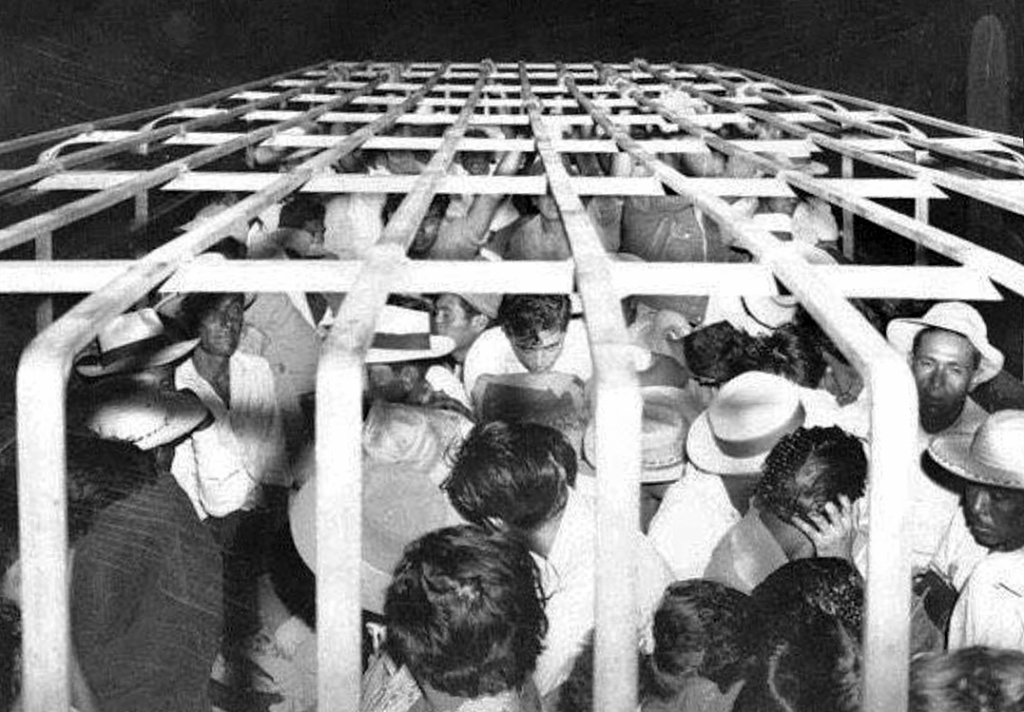
- What factors kept so many early U.S. presidents from taking a moral stand against slavery? Do any of these factors keep today’s leaders from taking a stand against prejudice?
- Would the world be better off if racial differences were ignored? (Note: If so, colorblind job layoffs would typically favor senior White employees, and physicians would no longer be able to use racial information for diagnostic and treatment purposes.)
- If there’s no precise dividing line between races, what does this tell us about the psychology of racism?
- What role did science play in the historical development of racial prejudice, and what role does it play today?
- In Southern U.S. states, Black people were often used in medical experiments, much as laboratory animals are used today. What role, if any, has society’s behavior toward animals played in laying a foundation for its treatment of racial minorities?
- The term “concentration camp” refers to a guarded compound used for the mass detention or imprisonment of civilians without trial, usually on the basis of their race, ethnicity, religion, or politics. Do you think the term “concentration camp” accurately describes the type of place where the U.S. government confined Japanese Americans during World War II?
- Has the U.S. government used euphemistic language to cover up its internment of Japanese Americans? If so, do you think this type of cover-up could take place today?
- “Operation Wetback” was a 1950s anti-immigrant campaign in which the U.S. government deported more than a million Mexican immigrants and Mexican-American citizens whose constitutional rights were ignored. Why is Operation Wetback rarely discussed in American history textbooks?
- Do you support the idea of U.S. government compensation, or “reparations,” for the enslavement of African Americans? If so, how should such reparations be made? If not, why not?
- If you had been an American college student in the 1960s, how involved would you have been in the civil rights movement? Would you have participated in lunch counter sit-ins? Freedom rides in the Deep South?
- Are college students today as committed to social justice as students were in the 1960s? Why or why not?