
Slavery and the
U.S. Presidents
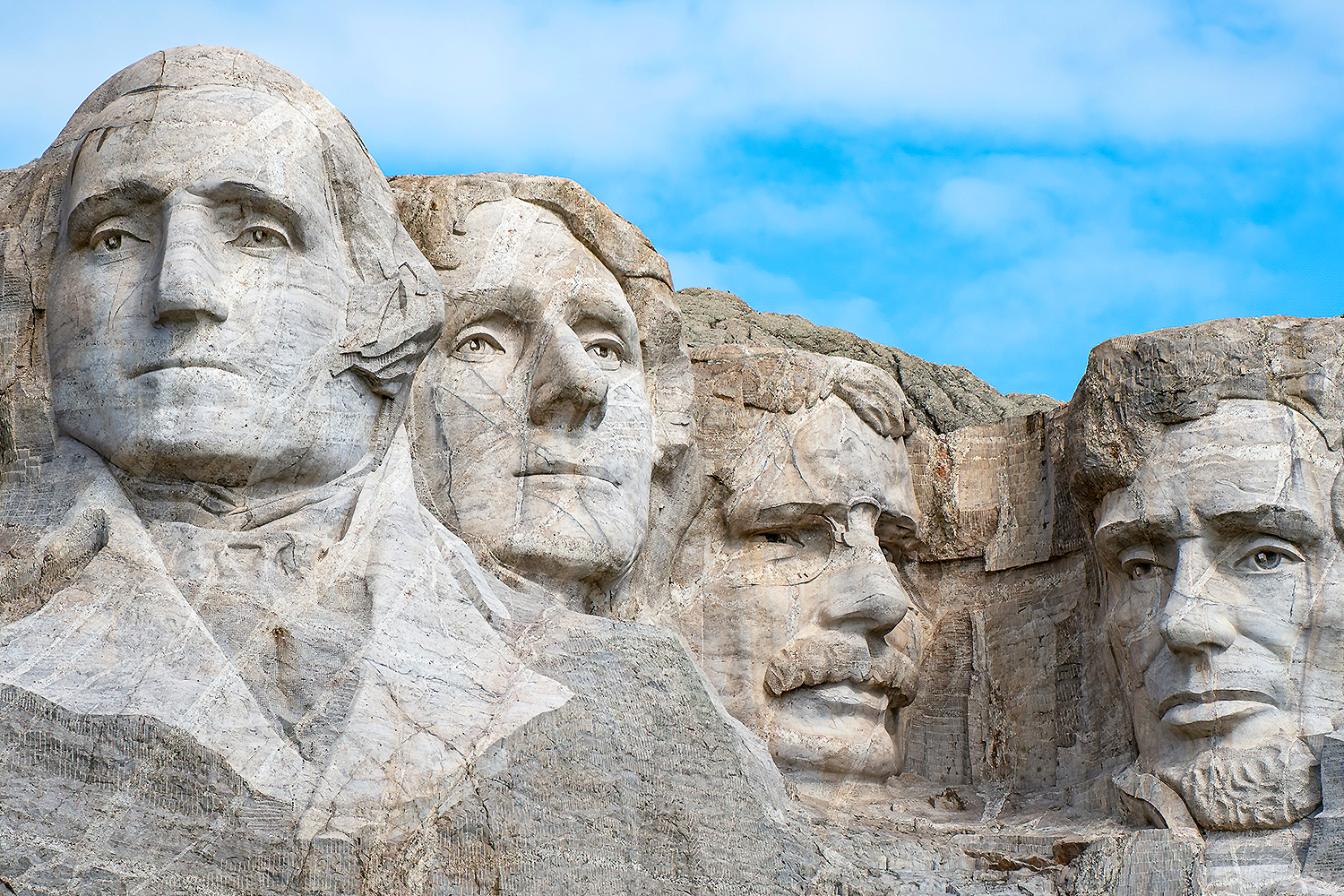
Other Large Slaveholders
These four presidents each owned between 100 and 200 enslaved people—fewer in number than the largest slaveholders, but no less connected to the American system of slavery.
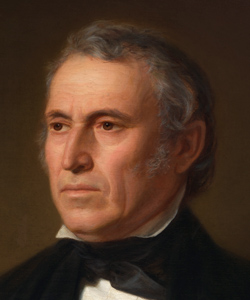
Zachary Taylor
Highest Number of Slaves Owned: 145
So far as slavery is concerned, we of the south must throw ourselves on the constitution & defend our rights under it to the last, & when arguments will no longer suffice, we will appeal to the sword, if necessary.
– Letter to Jefferson Davis, July 27, 1847
Zachary Taylor was one of the largest slaveholders to become president. Taylor inherited slaves, bought slaves, and bought plantations with slaves.
During his presidential campaign, Taylor told a fellow plantation owner “that I too have been all my life industrious and frugal, and that the fruits thereof are mainly invested in slaves.” Prior to his assumption of the presidency, Taylor owned slaves with a market value of $50,000, and by the time he died, Taylor’s worth, in current dollars, made him a multimillionaire (General Winfield Scott referred to Taylor as “a dear lover of money”).
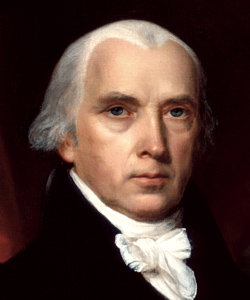
James Madison
Highest Number of Slaves Owned: 118
Of freeing slaves in America, Madison wrote: “Neither the good of the Society, nor the happiness of the individuals restored to freedom is promoted by such a change in their condition.”
– Memorandum on an African Colony for Freed Slaves, October 20, 1789
In private letters, Madison referred to slavery as a “dreadful calamity” and a “sad blot on our free Country,” and he wrote to Frances Wright on September 1, 1825: “The magnitude of this evil among us is so deeply felt, and so universally acknowledged, that no merit could be greater than that of devising a satisfactory remedy for it.”
Yet Madison never emancipated his slaves (despite a promise he made to do so), and he advocated sending Black people to Africa rather than abolishing slavery.
Perhaps most regrettable of all, Madison did not oppose the enslavement of children. For example, when Madison was informed that a French visitor had “procured a Negro girl, and only wants a boy in order that they may breed,” he arranged for funds to purchase a “Negro boy.”
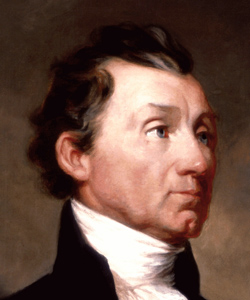
James Monroe
Highest Number of Slaves Owned: 75
We have had much trouble with the negroes here. The plan of an insurrection was clearly proved … We then made a display of our force and measures of defence with a view to intimidate those people.
– Letter to Thomas Jefferson, September 15, 1800
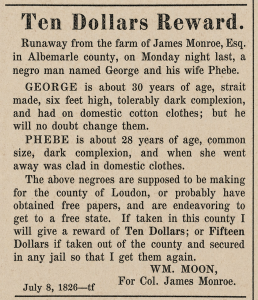
James Monroe referred to the slave trade as “an abominable practice,” yet as governor of Virginia, he oversaw the execution of roughly 35 slaves who were suspected of planning an armed revolt. Monroe also proposed several measures to prevent slave uprisings, such as increasing police patrols and requiring Black people to carry passes.
Monroe operated Virginia plantations with dozens of slaves for more than two decades. In his Annual Message to Congress on December 7, 1824, he declared: “The situation of the United States is in the highest degree prosperous and happy … Our institutions form an important epoch in the history of the civilized world. On their preservation and in their utmost purity everything will depend.”
John Tyler
Highest Number of Slaves Owned: 70
Abolitionists deserve the deepest curses of the patriot, for having put in jeopardy the noblest and fairest fabric of government the world ever saw.
– Letter to his son Robert Taylor, March 12, 1850
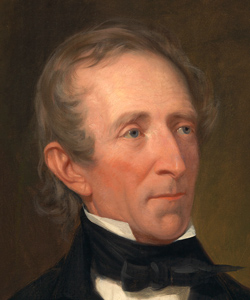
John Tyler was not only a large slaveholder — his record on slavery and civil rights was one of the most extreme of all U.S presidents. For example:
- When Tyler was a member of Congress, he was the only representative who argued that Congress had “no constitutional right to pass any law prohibiting slavery in the Territories of the United States.”
- Tyler argued that the extension of slavery to U.S. territories would improve the condition of slaves by increasing the demand for their labor.
- Tyler auctioned off a favorite house slave, Ann Eliza, to raise cash for a move to Washington, and he leased slaves to other people.